

Content Warning: This piece discusses religious trauma, spiritual abuse, and the aftermath of exposing abuse within church communities. It explores themes of disillusionment, emotional manipulation, and the challenging process of healing from faith-based trauma. Please read with care if these topics are sensitive for you.
“The cave you fear to enter holds the treasure you seek.” — Joseph Campbell
Sometimes life feels dark, heavy, and overwhelming, particularly when circumstances are outside our control and the pain we’ve been suffering with for so long isn’t going away. During these times, many of us search desperately for something—anything—to restore our sense of hope and joy, often without realizing we might be looking in all the wrong places.
Those of us who have experienced trauma for a long time have especially learned to expect that things won’t change, because if you expect that they won’t, then at least you won’t be disappointed. At least if you don’t hope for anything, you won’t be crushed. At least if you don’t allow yourself to feel any kind of joy, then you won’t get used to it and have it snatched away.
Mary Catherine MacDonald in her book The Joy Reset created an exercise concerning joy and hope. She said to say the word “joy” out loud, set a timer, and write for four minutes about whatever comes to mind without judgment. Then she said to do the same thing with the word “hope” for the next four minutes. Writing about these things revealed something important to me: my journey from church-based emotional dependency through disillusionment and numbness taught me that authentic joy and hope aren’t the dramatic, intoxicating experiences I once craved, but the subtle accumulation of small beauties that, like stalactites, build lasting strength in darkness.
The Loss That Changed Everything
Relationships used to be a real source of joy and hope for me until I experienced the loss of a church community when I exposed the pastor for abuse. During that time, the relationships that once gave me a sense of joy disappeared from my life, and that loss created a numbness in me that still hasn’t gone away.
I realize as I write this that one of the reasons I experienced joy in my relationships was that in the church, our relationships with each other were highlighted as being a source of joy and hope. We were encouraged to be honest with one another, pray for one another, and the connection we had in Jesus was everything. We belonged to each other, and that gave me a sense of family that filled a hole in my heart from family lost. These relationships also made me hopeful about our eternal future together.
The Intoxication of Belonging

I watched the second season of “Shiny Happy People” last night, and it reminded me of how good it felt to be together and belong at Christian concerts where we felt a sense of hope and belonging together. It was intoxicating—and intoxicating is the right word. If you’ve ever had a hangover, you probably know how bad it feels after a night of too much drinking. It might feel exhilarating while the intoxication is happening, but on Monday morning when it’s time to go to work, it’s really hard to feel anything except numbness. Why? Because we used up all of our energy living it up too much. We have to get through the week and give ourselves time to build up energy again.
This is what it felt like a lot in the church at times—experiencing emotional ups and downs, but we did it together, and that felt joyful and hopeful. But it also wasn’t balanced, like a lot of our fast-paced lives these days that sometimes we just have to get through.
Perhaps the biggest challenge has been creating genuine joy in my relationships in a world that is so polarized—not just in religion but most everywhere. It’s no coincidence that politics uses religion as its platform. That’s because there is no better way to build up an army to carry out a cause. Someone said recently that a group I was part of was brought closer together when we went through something hard. Difficult circumstances bring us closer together for sure, and I think that’s probably one of the main reasons so many of us gravitate towards a side or a specific denomination. Our core need for belonging especially through difficulties often dictates our choices.
But I discovered that quick bonds over a cause can also disappear as quickly as they formed especially if there is a disagreement. And I think most of us know that deep down, and that’s why we double down in our beliefs. Because our beliefs are about meeting a need that all of us have. Disagreements feel uncomfortable for this reason. The hardest thing I ever did was disagree with the leaders in church, because I knew when I did I was losing the relationship.
The Pressure to Conform
Recently I experienced some pressure from someone else who was looking to convince me that their spiritual beliefs offered hope to them, and they couldn’t understand why the same belief system that gave them so much hope and joy triggered me. Their need to continue to prove that their beliefs were hopeful made me uncomfortable. And I wondered why. I didn’t attempt to argue even though I felt my own pain suffered in the church was minimized and dismissed.
After I reflected on their attempt to help me see their perspective, I realized it was probably more of an attempt to connect than to prove me wrong. And that shed some light on what I’m attempting to write about joy and hope and how it doesn’t just happen overnight. But once we find it truly, we don’t have to work so hard to convince anyone else. Because it’s there and it’s deep and strong.
Chasing What Will Never Return
I don’t know about you, but I sometimes wonder if joy is ever possible again like I felt when I was in the church. Or hope. We were talked to so much about heaven and mansions and the importance of pleasing God so that we could get there one day. But I’m realizing that even during those momentary spurts of joy that kept me going back for more were a lot like an abusive marriage where we just keep repeating the cycle because we keep trying to get back to that love-bombing state. The reality is it will never be like that again, but we will chase it as long as we can. And some of us might just chase it the rest of our lives.
I’m realizing sometimes what we think are joy and hope really aren’t joy and hope. I think they might just be a lot more subtle than that.
A Different Kind of Building: The Stalactite Metaphor
Mary Catherine MacDonald talks about how stalactites are formed—one tiny drip at a time in the darkness of a cave:
“The whole absurd miracle begins with tiny droplets of water that seep through cracks and crevices in a cave ceiling… Remember this image: a mineral column creating itself out of almost nothing, and then reaching, reaching. This is hope, doing what should be absolutely impossible and gathering resources while she does it… And this image? This is joy, taking the present moment and reaching up toward her sister, hope. Given enough time, stalactites and stalagmites—hope and joy—can meet and merge, forming a pillar, slowly and impossibly growing in the dark.”
It’s such a beautiful picture of what hope and joy really are. But as I look back over my life, I realize how often I have missed this. When you grow up in traumatic circumstances, your brain is constantly looking for some kind of hope to cling to, and the church teaches us that it is what we can cling to. But what can a person do when the things we grabbed hold of just became dust in the wind?
Look around at what is left.
Learning to See What Remains
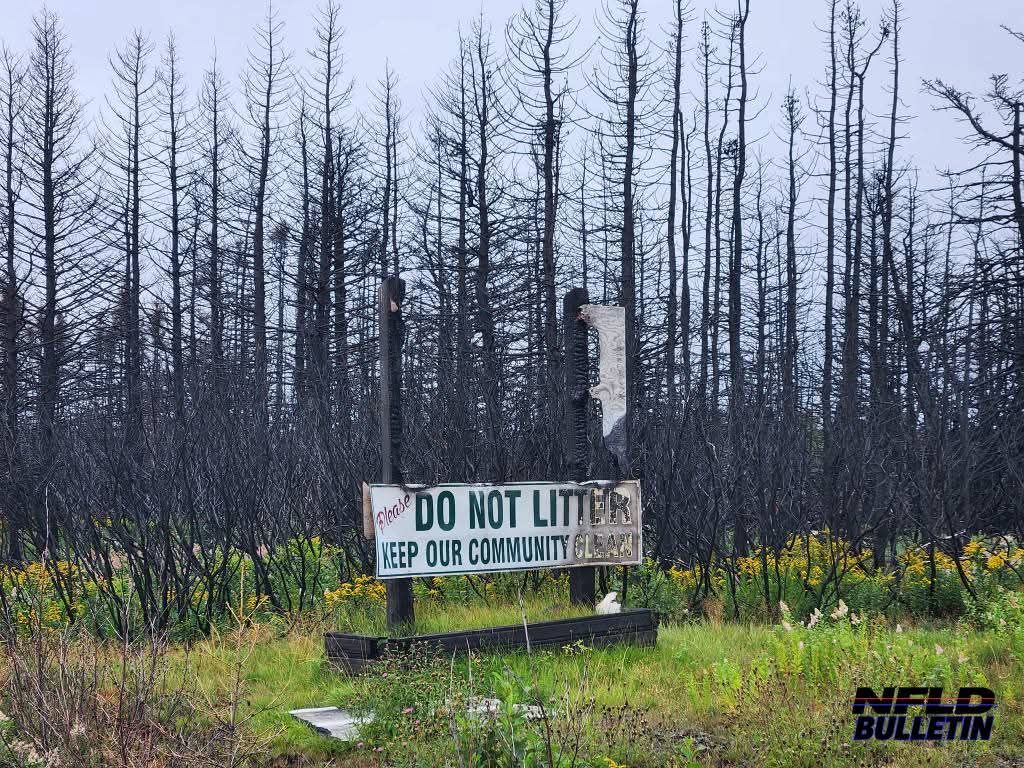
I’m noticing that it takes an awful lot of practice to notice what is left. A recent fire burned up thousands of acres in the beautiful land of my ancestors. When I visited it last year, I felt such hope and a connection to the land. And some of those places are now just scorched earth with burned-up trees, homes, schools, and churches. It was a place where it didn’t feel like anything bad could ever happen, but it did. My cousin there took pictures of the devastation, revealing scorched earth and immense beauty. There was so much loss but also so much beauty left behind.
Isn’t life like that? Loss and beauty intermingled together. If we spend too much time focusing on one or the other, we will find ourselves at times in overwhelming depression or with unrealistic expectations. Being able to acknowledge both and honor both is how we find balance. But it won’t happen overnight, especially if we’ve learned to expect emotional highs as joy.
The Quiet Revolution of Tiny Joys
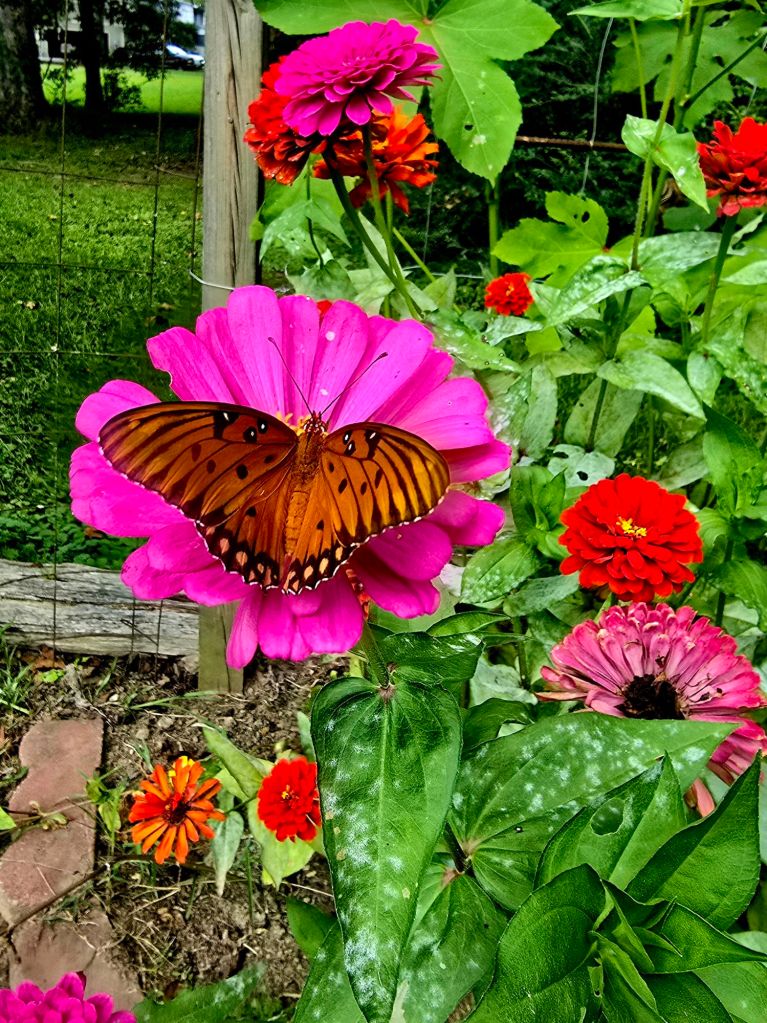

What does joy really feel like? Imagine a picture of a grown-up field of weeds. It doesn’t look like much. But if the picture was taken with a really good camera, you can take your finger and zoom in on that one bright purple spot and see the beautiful flowers and maybe even a few butterflies, bees, and birds. If you listen closely, you can hear the breeze rustling through the leaves, the birds chirping in the distance. Tiny little joys, as Mary Catherine MacDonald calls them.
They are tiny, but over time they create something strong and lasting if we can come to understand that this is what joy and hope really are. Unlike the manufactured emotional highs that demanded constant reinforcement and left me depleted, these small moments accumulate into something sustainable. They don’t require me to convince others of their value or defend them against disagreement. They simply exist, quietly building strength in the darkness, reaching toward something beautiful and permanent.
This is the revolution I’m learning: that real joy doesn’t announce itself with fanfare, and true hope doesn’t need an army to defend it. They grow one drop at a time, in the quiet spaces where we stop chasing what we’ve lost and start noticing what remains. And perhaps most importantly, they don’t disappear when someone disagrees with us, because they were never dependent on consensus in the first place.
What small joys have you overlooked while chasing bigger emotional highs? Have you ever found yourself defending beliefs not because they were true, but because they provided belonging? What might you discover if you stopped trying to recreate past experiences of joy and instead looked for what’s quietly growing in your current darkness?

 A Liminal Space
Leave a comment