

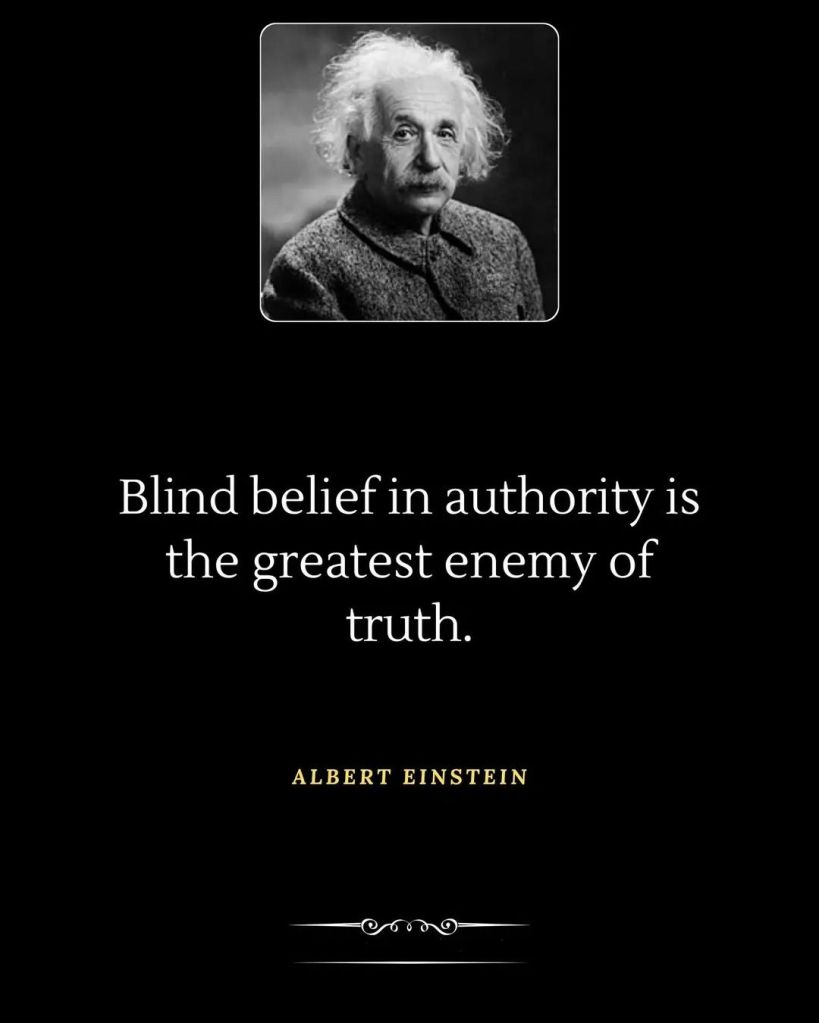
“Blind belief in authority is the greatest enemy of truth.” — Albert Einstein
The ambulance lights cut through the darkness at the convenience store. Someone had played Russian roulette and lost. As I drove past that night, eighteen and heartbroken after my boyfriend left me for my best friend, I looked up at the empty sky and wondered if anyone was even there.
That moment of complete despair led me to church. Not faith—desperation.
Searching for Answers
Growing up as an adopted child, I lived in survival mode. My father, once a bank vice president, had lost everything to alcohol and reckless spending. After his nervous breakdown, multiple shock treatments stole his memories along with his hope. He sat at home, disabled and ruminating on his failures, while my mother worked to keep us afloat.
I knew one thing for certain: I didn’t want my life to turn out like theirs.
As a high school senior with dreams of becoming a writer, I thought I had a plan. Then relationships derailed me. First one toxic situation, then another that ended with that devastating betrayal. In my pain, I was searching for the same answers humans have always sought: Where did we come from? What does it all mean? Why does life work for some people and not others?
Church wasn’t part of my childhood. We’d attended a few times—I remembered felt board figures, communion wafers, and playground snacks. My father had once bought an $80 leather Bible from a door-to-door salesman (astronomical money back then), but when I suggested he read it during one of his complaints about life, he dismissed it: “It doesn’t help.”
When I met my future husband at nineteen, everything looked different. He was a church elder, moral and decent. More importantly, his family attended church religiously and seemed to have figured out life in ways mine never had. Early dinners at their house felt like a TV show—everyone laughing, sharing stories, no one yelling or sitting in the chair talking about how they didn’t want anyone to come to their funeral as my father sometimes ruminated.
The Pedestal Problem
My first Sundays in church, shame consumed me. According to the “good book,” I’d made plenty of mistakes that needed fixing. I had no idea I was what we now call a trauma survivor—someone whose childhood experiences were so overwhelming that my mind had blocked out most of my early memories as protection. I thought my biggest problem was being adopted and never fitting in.
The church promised family, and my husband’s relatives seemed like the perfect example. In their system of easy answers, I’d finally found both the problem and solution. My father had made bad choices, fallen into sin, and dragged our family down with him. Church taught me that God was the answer: acknowledge your sin, follow Him, and everything would be blessed.
I was baptized twice—first to join the church, then again because I wasn’t sure the first time “took.” I threw myself into getting on the straight and narrow, but it was harder than expected. Cleaning up my behavior didn’t manage the difficult emotions I thought were just my sinful nature. I gave everything I had, to the point of exhaustion.
But perfection proved elusive, both for me and the people I’d put on pedestals. My husband’s “perfect” family began revealing their own struggles. Both of his siblings battled addiction. His divorced parents still had an obvious trauma bond. Narcissistic personalities reared their ugly heads.
I never meant to idolize anyone. It happened because I was desperately grasping for answers to end so much pain.
When Systems Fail
Tired of trying to be perfect and watching others fail at it too, I searched for another solution. A kind doctor I worked for told me about a grace-filled church where you didn’t have to try so hard. Exhausted from years of religious performance, I convinced my husband we needed relief from our disillusionment.
The small church felt different. The pastor had time for personalized conversations. He preached about God’s love instead of His judgment. His sermons seemed intellectual and challenging. Finally, I thought, here was a place where I could breathe.
But this situation didn’t end well either. Even with less pressure, I still struggled with overwhelming emotions and a deep sense that something was fundamentally wrong with me. What I now understand is that my problems stemmed from unprocessed trauma—experiences my nervous system was still trying to manage decades later.
The pastor’s approach was to frame everything spiritually. Every struggle became a spiritual battle, every emotion a test of faith. When I shared my deepest pain, he positioned himself as the conduit for my “restoration.” Looking back after reading countless survivor stories, I recognize this as a common pattern: vulnerable people seeking help from authority figures who exploit that trust.
Einstein’s words ring true: “Blind belief in authority is the greatest enemy of truth.” The church leaders were the authority, their doctrine the only truth, their interpretation the final word. When they occupied those pedestals in my mind, I didn’t have to wrestle with uncertainty or think critically. My struggles were either my sin or lack of faith. My success would come from church attendance and mission work.
It was the only truth I knew until I discovered it didn’t actually work.
Learning to Trust Myself
After leaving organized religion, I sometimes made the same mistake with different authorities. As someone working to understand my trauma responses—the way past experiences were still affecting my body and mind—I connected with a coach who ran a recovery program. The information was genuinely helpful, teaching me how childhood experiences can rewire our nervous systems and why traditional “just get over it” advice fails trauma survivors.
But when this leader also turned out to be manipulative and exploitative, I recognized my pattern. I kept looking for one person, one system, one relationship to be the missing piece—the thing that would finally help me find what I was searching for.
The problem wasn’t the systems themselves. We need communities and leaders to help organize life and learning. The problem came when I elevated them to sources of ultimate truth, suppressing my own inner knowing in favor of someone else’s certainty.
Think about what these institutions gained from my blind belief. It was like reaching fifth grade and deciding I was smart enough and didn’t need to learn anymore. But it was actually the problems I couldn’t solve within those systems that pushed me to keep searching. The unbearable pain I couldn’t ignore that forced me to look elsewhere for answers.
But it was actually the problems I couldn’t solve within those systems that pushed me to keep searching. The unbearable pain I couldn’t ignore that forced me to look elsewhere for answers.
The Canary in the Coal Mine

When canaries in coal mines got sick, miners had two choices: investigate what was poisoning the air, or blame the birds for being weak and keep mining until they got sick too.
I think many of us are breathing toxic air without realizing it. We find just enough relief in pretending everything’s fine that we ignore the warning signs all around us.
But here’s what I learned even in those flawed religious systems: suffering matters. The Jesus I read about didn’t look away from pain or pretend everything was fine. He moved toward people who were hurting, challenged systems that oppressed them, and ultimately died because he wouldn’t stop speaking truth to power.
Even after everything I witnessed in institutional religion, I still see Jesus as someone worth emulating—not because he had all the answers, but because he was willing to face hard truths and love people through their pain.
Breaking the Cycle
I don’t have solutions to all of human suffering. But I know that learning from our own pain can make a real difference for others around us.
Looking back, one of my biggest mistakes was ignoring my gut when I knew something was wrong. There was a time when someone I loved dearly was being harmed, and I listened to authorities who told me to wait, pray, give it time. My instincts screamed that immediate action was needed, but I deferred to people who claimed to know better. The consequences of that choice still haunt me.
That’s history I know happened, and history I refuse to repeat.
What We Can Do

We’re living in times when everyone seems to have the ultimate solution to complex problems. The temptation is strong to find someone else to tell us what truth is, especially when the world feels chaotic and overwhelming.
But there’s enormous responsibility that comes with thinking for ourselves. Maybe that’s why it’s easier to let others decide what we should believe.
Here’s what I’m learning: we can do better, but it starts with paying attention. When children tell us something’s wrong, when they say they don’t feel safe around someone, we listen. When someone reports being harmed, we don’t minimize it or hope it goes away. Trauma doesn’t just disappear on its own—the body literally keeps score of what happened to us. But it can heal when we’re willing to face it honestly and call it what it is.
We can slow down and notice when someone around us is suffering. We can choose to listen and love, especially within our own families. We can recognize that when one person suffers, we all feel the effects, no matter how much we convince ourselves we’re islands.
The truth isn’t easy to package into neat systems or perfect leaders. It’s messier than that, requiring us to think critically, trust our instincts, and stay open to learning. But our individual choices matter enormously.
We can’t solve everything, but we can do our part. And our part—however small it might seem—makes a real difference in creating a world where fewer people have to suffer alone.
The goal isn’t finding the perfect authority to follow. It’s learning to think for ourselves while staying connected to others who are also seeking truth with humility and care.
Questions to Sit With
As you reflect on your own journey with authority, truth, and healing, consider these questions:
What pain in your life have you been told to minimize or ignore—and what would change if you honored that pain as real and significant?
Who are you looking to for ultimate answers right now, and what would it feel like to trust your own inner knowing alongside their guidance?
—
Processing these themes can bring up difficult emotions and memories. If this post resonated with you and you’d like someone to talk through your own experiences with authority, trauma, or finding your voice, I’m here to listen. Sometimes we need another person to witness our story and help us sort through what we’ve learned. You don’t have to figure it all out alone. Feel free to reach out—there’s no judgment here, just space for whatever truth you’re ready to explore.

 A Liminal Space
Leave a comment