
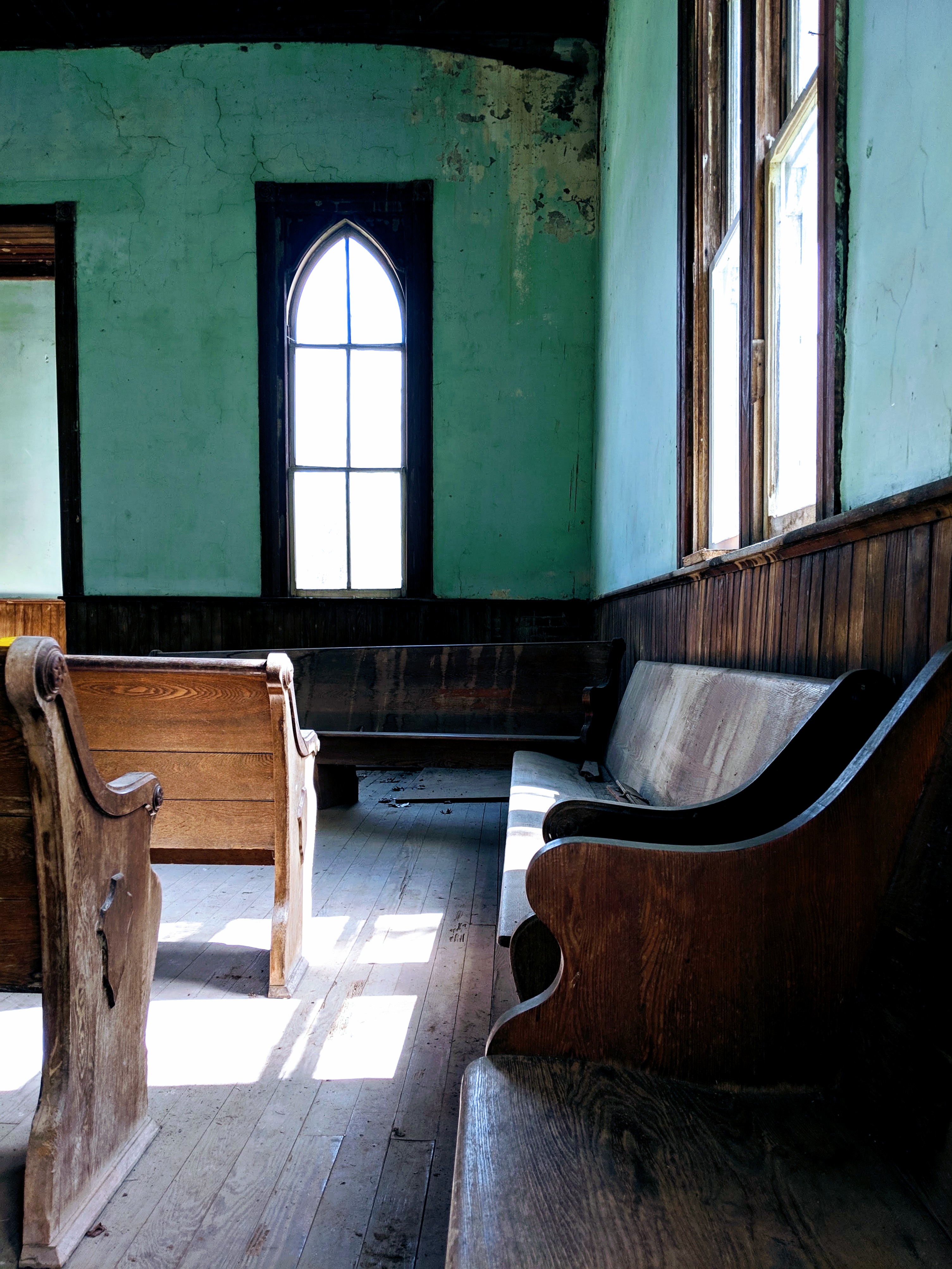
Content note: This post mentions church worship, end-times teaching, and religious imagery.

I can still hear the words of the song I Pledge Allegiance to the Lamb by Ray Boltz playing in my head. I was standing up in front of church with other members of a praise team, singing about the end times and about being saved by the blood of the Lamb and our testimony. In my earlier years as a Christian, I read all those apocalyptic thrillers and books that told us what to look for when the end came. I even remember a sermon about someone in the royal family being the Antichrist. Reading those books energized me and made me excited about being on God’s side of an earthly battle that would lead to our ultimate victory as God’s chosen people. Because I believed I was part of the winning team, I wasn’t afraid. It felt like back then I was an excited teenager getting ready for a Friday night football game.
But those days are long past. I confess I miss the excitement, the joyful hope, and the sense of belonging I felt, even though I don’t see things the same way anymore.
I don’t know about you, but life is feeling pretty heavy lately. Headlines scream at us from everywhere about threats, blackouts, and AI taking over, and the fear takes me right back to those earlier years.
I learned a long time ago in trauma recovery education that feeling powerless is when trauma happens. When we are in circumstances that feel completely out of control and fear takes over, we begin to go into survival mode. That’s when our defense mechanisms kick in. We want to fight, to run, or to do whatever we can to escape the threat. But the problem today is that so many of these threats are ones we feel powerless to escape. And this is where the long-term impact of trauma, like PTSD, can happen.
This is why I’m limiting how much time I spend on social media and the news. There is only so much panic I can take in over the course of a day. I don’t want to be taken completely by surprise, so of course I’m not going to stick my head in the sand and pretend it’s not happening. I will do what I can to have provisions in place, so that if any of the worst possibilities come true, I’ll at least know I did all I could.
I wonder about those church days now, after being disillusioned by a system of belonging that was conditional on the beliefs we shared. I say conditional because when I didn’t agree, my place of belonging ended. When there was an actual threat, the decision to move past it quickly and go on about the business of the church revealed something to me about the foundation I was standing on. That same high-control system really has me scratching my head today. I’ve realized there is nothing that toxic systems won’t do to keep themselves going, even if it means sacrificing the very foundation they stand upon.
Watching what is happening in our world and experiencing so much threat, I am gaining new insight into why people grab hold of whatever belief system will keep them going. As a friend recently posted on Facebook, believing one thing or another about what is happening in the world offers a certain level of belonging and certainty, the same comfort I experienced in a belief system that said I was on the winning team.
But here’s what I’m feeling: I don’t trust the belonging that comes from viewing the world through the lens of one side or the other, because I recognize how fragile those conditional systems of belonging actually are.
The question that remains is what I can actually trust, and that’s what I’ve been thinking about so much lately.
Honestly, I don’t know what I believe anymore. I still love the stories of Jesus: the way he saw people, the way he healed and loved and told stories that made me think. The promises of relief, the hope of an eternal home, and his admonition to love and lay down our lives for our friends. The encouragement not to fear but to follow him when times got dark. Even as I write those words and think about what I learned, they tap into a real place of strength inside me. Jesus was someone who was loyal until the end. He put his money where his mouth was. He didn’t abandon people when times got hard. He stayed, even though it meant he lost his life in the end.
That means something to me. It has become something I feel is foundational in a world that feels so unstable: belonging that isn’t conditional. People who stay even when we disagree. People who don’t try to convince you that what they believe is the only way.
I’ve thought a long time about one of the things that frightens me most after leaving high-control religion. It’s not the music, the sermons, or the preacher standing in the pulpit, although all of these are still triggers. It’s actually the framework: a system of belonging where relationships are built on something conditional. Because if the conditions aren’t met, the relationship won’t last. And I can’t afford to build my life on things that won’t hold up anymore.
Based on my understanding of the long-term impact of trauma, the people around you who support you through thick and thin are what will lessen the impact. Those people who let you know you aren’t alone, and mean it. Those people who don’t need you to agree or to be who they need you to be in order to fit. Those people who share the resources they have. That’s what matters now.
I have a few friends I can agree to disagree with. We can talk about AI, politics, or religion and still enjoy a coffee or a chat without trying to convince each other that what we believe is true. We hold space, listen to another person’s perspective, and take it into account. We don’t ghost each other over our views on abortion or same-sex marriage. We don’t “other” each other because of who someone voted for, even someone we believe is a threat.
I’ll admit that last one is probably the most difficult for me. When people in leadership bring so much division by the way they speak about the opposite party, it can make it feel like anyone who voted for him is bad. But I’m realizing things are not nearly as black and white as they seem. That’s the thing about fear: our thinking becomes black and white because our focus is on the threat and how to escape it.
What I’m realizing is that we need emotions stronger than fear to hold us together when times get hard. So it’s important to keep an open mind and not assume the worst about people we don’t know. At the same time, if people show us who they are by how they treat us, we should believe them and protect ourselves from anyone who can bring us harm. In times like these, it’s especially important to stick close to the people in our lives who really do have our back.
I still see myself standing in front of the church, singing about being saved by the blood of the Lamb and our testimony. I see things differently now. But maybe our testimony was this: that we would follow the example of the friend who stayed, even until death, and stay loyal to each other. Maybe that’s the part we weren’t wrong about.
Who stayed with you when you stopped believing the same things?