

Crossing the threshold from adolescence into adulthood requires an ordeal, a tempering of the individual that begins the process of ripening. There is no easy passage. Many traditional cultures escorted their youth into the world of adulthood and the sacred through an elaborate series of rituals. These rituals occurred in nature, in the holding space of forests and caves, savannahs, and bush. It was a space outside the ordinary world of the village, apart from the community, and often took place over many weeks and even months. It was a time of tempering the young ones with intense ritual ordeals that took them beyond their capacities to endure. Something died in the process. Something needed to die in the process. And something needed to come forward. Some new shape of identity that was wedded to the silt and slope of the land, which spoke the feathered and furred language of the creatures and the song of the dawn. This new identity was comingled with the holy topography. They became the same.”
— Francis Weller, In the Absence of the Ordinary
—
I’ve been reading Francis Weller’s book In the Absence of the Ordinary, and in many ways it has resonated with something deep within me. The same place that caused me to choose to name my website aliminalspace — and before that ourunseenhope . I’ve been thinking about why I keep returning to names like these. I think it’s because they point toward something I’ve always been drawn to: the things we cannot see with the naked eye. The invisible current running beneath the surface of ordinary life. Both names carry the same longing — a conviction that what we most need is not always visible, that finding it requires something more than a quick search. It requires the willingness to stay in the uncomfortable, in-between places long enough to let something real emerge.
What I find in my own life these days, though, is that instead of going deeper, I have a tendency to drift — moving from one book to the next, one podcast to another, one YouTube video to the next, searching for that small nugget of nourishment that will get me through the day. Lately I’ve been reminding myself to slow down. To take in information more slowly. To notice the birds. To hear their songs. To notice the sunrise and the sunset and the clouds. There is so much beauty happening in the present moment that I miss entirely when I’m moving too fast.
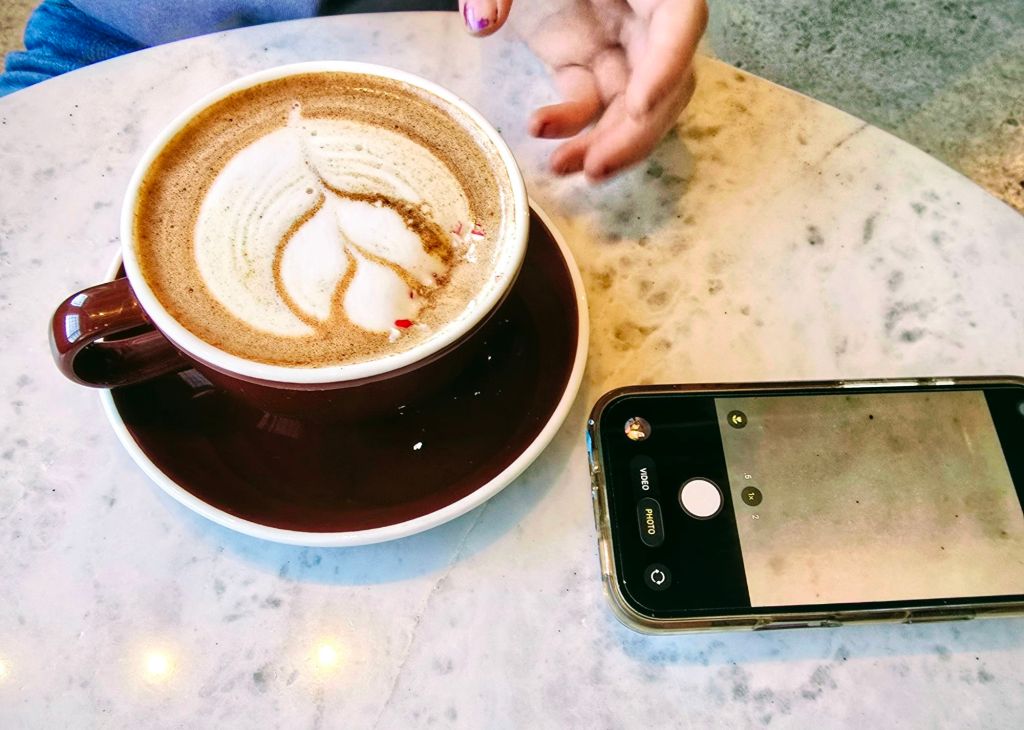
Yesterday, while enjoying a coffee with my daughter, I noticed a robin sitting on a nearby fence, just observing. Probably on the lookout for its next meal somewhere in the environment. What’s interesting is that the bird stands out in my memory far more than the loud music and voices filling the coffee shop around us. I will always choose going outside when the weather is nice over the noise. But it didn’t used to be this way. Maybe it’s a natural part of the aging process to want to slow down — to notice, past 50, the things we once took for granted.
Discovering Francis Weller’s work has been timely. I especially appreciate how he draws on indigenous wisdom and weaves those practices into a conversation about our fast-paced modern lives. The simple, rooted ways of indigenous communities are a precious gem in a world moving so quickly that most of us don’t even notice what we’re losing. I wonder sometimes whether things aren’t moving so fast precisely because of the absence of the ordinary — because so many of us are ricocheting from one thing to another, consuming and searching, trying to fill a hunger we can’t quite name.
I love technology. I’m one of those people who gets drawn in by the newest phone commercial and briefly believes that buying it will give me something I’m missing. And I understand why — most of us don’t like sitting with the feeling that something is absent, because that feels uncomfortable. But lately I’ve been wondering what lives in that empty space, and whether it might be intended for something more. When I’m hungry, I can reach for a cookie or potato chips, or I can reach for something that will actually nourish me — nuts, an apple, a salad. It’s not nearly as exciting, but my body thanks me for it. I’m not saying never enjoy a new phone or a cookie. What I am saying is that neither one will reach the deeper hunger. We need more than that to be truly satisfied. And maybe it’s actually okay if my life doesn’t suffer from using a phone that’s a little slower — because maybe slowing down is not a loss at all. Maybe it’s okay to simply notice what others are telling me I need, and recognize that I don’t have to consume it all before moving on to the next thing. Because maybe it’s in the discomfort of not having something — in that restless, reaching feeling — where the real growth happens.
That place of discomfort is what I mean when I say liminal space.
And here’s something I’ve had to reckon with. There was a time in my life when I believed it didn’t matter — that the state of the earth, the pace of consumption, the slow erosion of beauty and community — none of it was my concern, because God would take care of it all. That it was all going to burn up anyway. I believed this sincerely. And for a while, it was a comfort. But it was also a way of not looking too closely, not sitting in the discomfort of actually seeing what was happening around me. The harder I look at it now, the less sense it makes — especially because the very tradition that taught me this also said clearly that it was humanity’s responsibility to tend the earth. We held two incompatible things at once and called it faith.
I’ve since learned to be slower about what I take in. After what I’ve experienced inside religious systems — systems that offered certainty and belonging in exchange for not asking too many questions — I’m no longer quick to buy what people are selling, even when what they’re selling contains real truth. And there’s a lot of it out there right now. A lot of information dressed up in the language of healing, telling me I’m missing something that they happen to have. It feels, many times, very much like a phone commercial.
I’m not saying the phone offers nothing real. The last one I bought has genuinely impressed me. But I don’t need it to complete me. And I don’t need the next framework, the next training, the next voice telling me I’m one purchase away from wholeness.
Because what Francis Weller is pointing to is as close as the robin sitting on that fence, watching the world with patient, steady eyes, trusting that what it needs is already somewhere nearby. What if nothing is missing at all? What if everything I’m searching for is right here, and I simply cannot see it because I keep looking somewhere else?
That robin came back to me as I was finishing these thoughts. It didn’t search frantically. It didn’t scroll. It sat, and it watched, and it waited. And then it found what it needed.
Maybe that’s the practice. Not just consuming less — but learning to be still enough to actually see what’s already in front of us.
Food for thought today.
Resources:
Stop Optimizing Your Life HealthyGamerGG
Tending the Soul in Uncertain Times – Francis Weller and Anderson Cooper


 A Liminal Space
Leave a comment