
Francis Weller in his book The Wild Edge of Sorrow says, Every day we are asked to sit with pieces of our interior world that lie outside of what we find acceptable and welcome. We must explore our learned responses to our places of suffering and actively engage these pieces of soul life.
What are the parts of our souls that we find unacceptable and unwelcome? And how have we learned to respond to these parts that cause so much suffering?
It doesn’t take long for the parts he is talking about to come to my own mind. The parts of myself I find unacceptable. I have spent so much of my life closing and barring the door to these parts that I don’t want to come in. Why? Because when they come they are a terrible inconvenience to my life. They drag up memories with them that I’d rather not think about. All those things I wish I’d done differently. All the ways I fell and continue to fall short. And all the losses that resulted. I’m realizing as I get older how much energy it requires to continue to push on this door to prevent it from breaking open. So, slowly over the past few years I’ve been allowing a little bit of what is behind the door to come through. And to invite it inside to have a seat at the table.
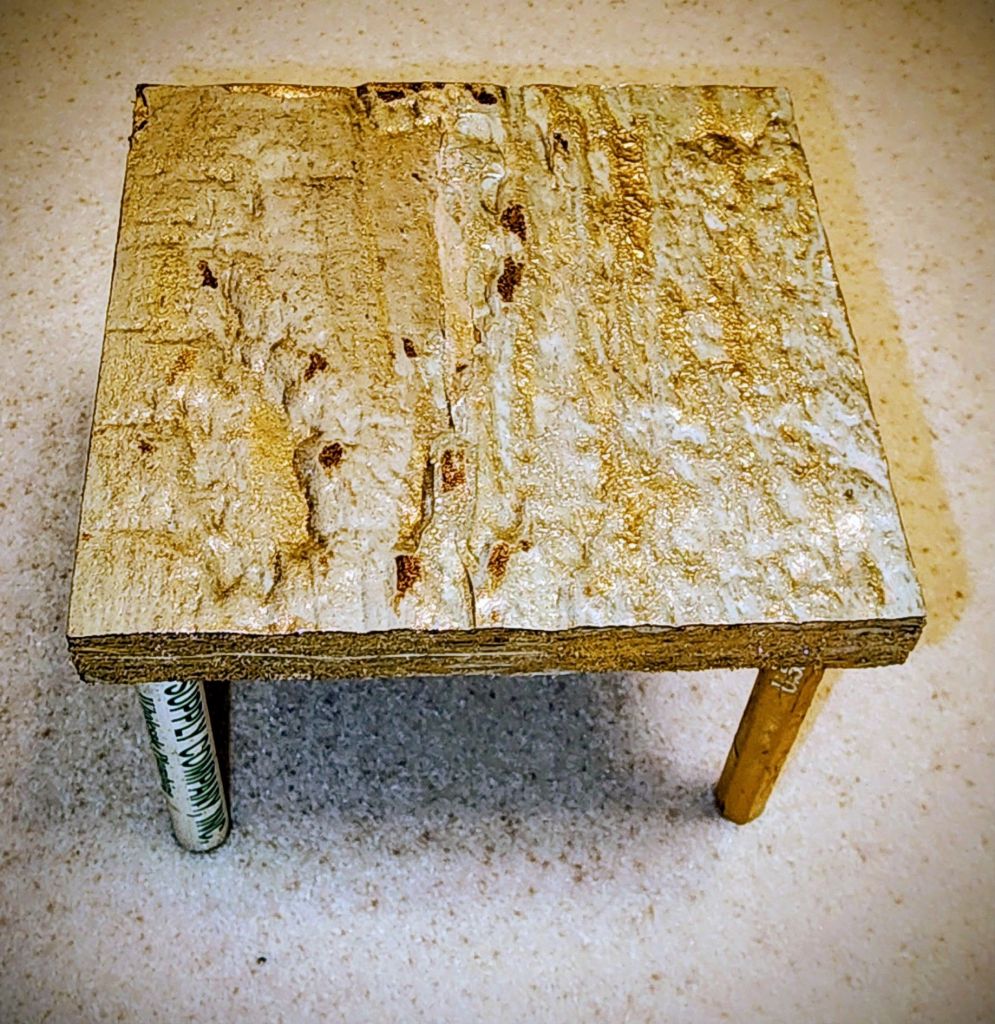
Sitting on my desk is a little table my son helped me make. It was an art project with a spiritual director friend of mine. It has legs made out of pencils and a tiny piece of pressed board as a top. After my son made the table, I painted it gold. My spiritual director friend (I highly recommend her) said it is a table where we can invite those parts of ourselves that we treat as enemies and listen to what they have to say. Inspired by the scripture verse from the 23rd Psalm—”You prepare a table before me in the presence of my enemies”—this little golden table becomes a sacred space where we can sit with the parts of ourselves we’ve banished, listening to what they have to say with curiosity rather than judgment.
Different ones have shown up when I’ve been intentional to invite them in. I think the one that has shown up the most is the one that has a long list of unmet expectations. They are loud and pointing at all the things I should have done that I didn’t do. And all the things that I did that kept me from doing what I should have done. They remind me especially of all the wasted time. Regret is written across their face. Exhaustion from all the failed efforts. All the things started never finished. All the broken promises. All the memories of people who gave up on them being brought to mind again and again. A whole church full of people clicking their tongues and shaking their heads. Judgment. Shame. Disillusionment come and take their seat next to regret.
I listen. Trying not to interfere. Regret’s concerns are not wrong. Wasted time. Wasted energy on relationships with people who didn’t know how to help. We all thought we had the answers that would keep this from happening. But no matter how much you judge, a person cannot know unless they walk a mile in another’s shoes. But we try don’t we? We try to do everything we can to be proactive and protect ourselves from the worst that could come. Believe the right thing. Listen to the right person. Go to the right school. Work hard. Set yourself up for success. We aren’t wrong to pursue these things. Regret isn’t wrong in many of the things they point out that I could have done differently. There is wisdom in what they have to say. The worn out face and weary eyes tell a history that holds much wisdom. The question isn’t about what a person needs to do to move forward. The question is rather how to move forward at all? Which takes me to another question. How did I wind up in the predicament that resulted in much loss? Regret reveals the answers. Standing at the door of a minister’s office. What was I looking for? The same thing I’m looking for today. A way to move forward. Someone to guide me toward healing and peace. I was given a prescription that day to move forward. Just believe. Just trust. Be faithful. And I did. But it didn’t get better. It got worse.
There are many people who assume that they know why it got worse. They think they know what I should have done and what I should do now to move forward. They have a prescription. And looking back I realize this is in and of itself the problem. Believing that we have the knowledge that will protect us from what could happen.
I learned when I worked in residential treatment for adolescents that there are natural and logical consequences for our behaviors. If you drink and drive and crash into something or someone else this is a natural and logical consequence to our behaviors. Certainly, by learning from this consequence one can prevent themselves from having another drunk driving accident that they are responsible for from happening again by not drinking and driving. Choices matter. I’m not negating this at all. What I am saying is assuming that we have a right to judge someone else’s choices and that somehow that will safeguard us from harm will set us up for disillusionment.
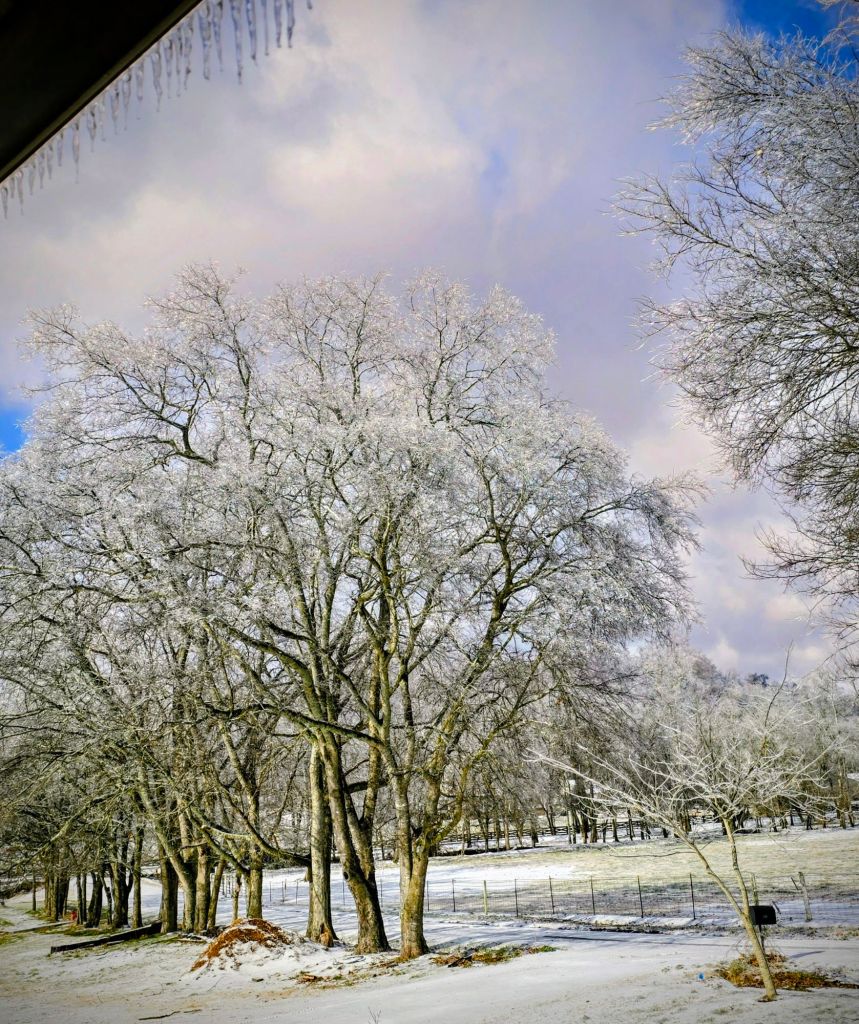
My cousin and I talked about how in our current winter storm we are all in the same situation stuck at home and cold if we don’t have power or sufficient heat. Whether we live in a half a million dollar house or a mobile home we are all in the same boat. This is the truth about life—some things are simply outside of our control, no matter how carefully we plan or how faithfully we follow the prescriptions we’re given. Some things are outside of our control. And some things are within our control. It’s like the wisdom of the alcoholics anonymous saying. Grant us the wisdom to know the difference.
How can we know the difference? I am learning from Regret that there are things I can do differently and make a difference. When you know better you do better. Regret isn’t an enemy but the pressure it puts me under can become a real enemy. Regret is screaming shouting that it’s too late that you’ve messed up missed all the opportunities that you’ll never get back. Figure out the way forward. Push yourself until you get there. Because Regret is so little given the opportunity to speak it works extra hard to be heard when I actually give it a chance to speak. Sometimes, I even agree that I’ll do better just to get them to be quiet. But lately I’ve placed a plate in front of Regret and had a conversation. Enjoy your meal I say. Take all the time you need to savor every bite. I’m going to allow you to sit here and speak. Regret is quite surprised. And its friends Judgment, Shame and Disillusionment who have tagged along look quite surprised. I hear you I say. I’m listening. I’ll no longer shut you out. I know that you just want what’s best for me. Let’s learn together how to move forward.
While it’s true that we cannot change the past and that we cannot get back what was lost…it’s also true that we won’t find the ability to move forward into the life we still have left to live in the same way that we did before. Rigidity, certainty and judgment—the learned responses—do not work anymore.
What was I looking for when I stood at a minister’s door? Compassion, kindness and a place to belong. I received it but it came at a price. Conditional love and belonging which was all I’d ever known. The reality is I’ll never have enough energy to meet all the expectations. So it wasn’t what I was looking for after all. Regret listens and understands. They ask what can we do to find another way?
I think of a little girl sitting next to my bed creating stories in my head that took me to an imaginary place where I received what I’d always wanted. Acceptance, belonging and unconditional love. No expectations. No judgment. When my pen touched the paper I created the life I longed for without judgment. A new start. An adventure that I didn’t know the end until it was written. It’s ok to take the pressure off. To notice the progress you are making. Even the little things. It all matters. It’s ok to love yourself when you wished you’d done it differently. It’s ok to start again. Everything we need is inside ourselves.
We are good people who have at times lost our way trying to find our way home. We got lost not because we were bad or foolish, but because we trusted the wrong maps, followed guides who didn’t know the terrain of our particular journey, and believed prescriptions that promised certainty in an uncertain world. We are people who have survived, who have kept searching even when the path disappeared beneath our feet. We are people learning that the way home isn’t found by doing everything right, but by having compassion for ourselves when we discover we’ve been walking in circles.
Home is closer than you think. Home is truly where your heart is. It’s ok to open the door and go inside—not the door that leads to the expectations and judgments we’ve been running from, but the door that leads inward to those exiled parts of ourselves waiting at the golden table. The door that leads to the warmth and welcome we’ve been seeking everywhere else. The door to ourselves.
—
Every day we are asked to sit with pieces of our interior world that lie outside of what we find acceptable and welcome. We must explore our learned responses to our places of suffering and actively engage these pieces of soul life. We have often treated these parts of ourselves with indifference, if not outright contempt. I recently invited a group of people to share in a ritual in which we turned toward these outcast parts of our lives with compassion and apology. The ritual was deceptively simple. We placed five large stones on the ground near the base of an immense, ancient oak. As I drummed and we all sang, the men and women approached the stones and knelt on the ground and slowly lifted one of them off the ground. In their minds and imaginations, they were seeing an outcast brother or sister lying under the stone. This piece of soul life had been weighed down under it and unable to stand upright again until this gesture of kindness was offered. People wept as they lifted the stone off these parts of themselves and slowly welcomed the fragments of life these outcasts carried for them. It was beautiful and healing.
Francis Weller, The Wild Edge of Sorrow
Weller goes on to share the poem by Rebecca del Rio, Prescription for the Disillusioned.
Prescription For The Disillusioned
Come new to this day.
Remove the rigid
overcoat of experience,
the notion of knowing,
the beliefs that cloud
your vision.
Leave behind the stories
of your life. Spit out the
sour taste of unmet expectation.
Let the stale scent of what-ifs
waft back into the swamp
of your useless fears.
Arrive curious, without the armor
of certainty, the plans and planned
results of the life you’ve imagined.
Live the life that chooses you, new
every breath, every blink of
your astonished eyes.
 A Liminal Space