
When we only look at what’s chasing us, we miss so much…
The Joy Reset: Six Ways Trauma Steals Happiness and How to Win it Back, Mary Catherine MacDonald, PhD
Spiritual abuse doesn’t just hurt—it steals reverence. And once that’s gone, finding it again feels nearly impossible.
I was reading Dr. Mary Catherine McDonald’s The Joy Reset: Six Ways Trauma Steals Happiness and How to Win it Back when I had to stop mid-chapter. She explains that reverence is one of the primary ways our nervous systems reset from constantly scanning for threats, especially after trauma. That’s when it hit me: “When we only look at what’s chasing us, we miss so much.”
This is exactly why moving forward after church abuse has been so damn hard.
Reverence is what brought me to that church in the first place. The awe, the wonder, the searching for God—that path led me straight to my pastor’s door. The very thing that used to heal me from years of family abuse became the weapon used against me.
Growing up, reverence had always been my lifeline. I’d read and written stories where light overcame darkness. My favorite was Stephen King’s The Stand—this epic battle between good and evil after a pandemic wipes out most of humanity.
There’s this character named Lloyd who gets trapped in a prison cell after everyone dies. He’s starving, desperate, ready to do unthinkable things to survive. Then Randall Flagg shows up—the devil in a denim jacket with a smiley face pin—offering escape with his crows trailing behind. He tells him he picked him. That he’s special.
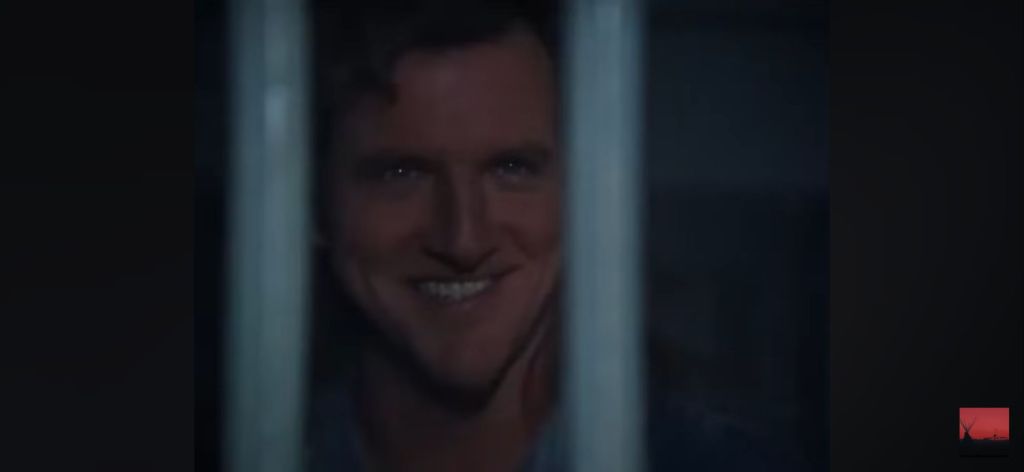
Lloyd follows him. Most of us might have made the same choice under similar circumstances.
But Lloyd discovers too late how evil his rescuer really is. He becomes Randall’s most loyal follower until he finally sees the truth. Then he can’t live with himself anymore.
I relate to Lloyd more than I want to admit. The difference is I didn’t even know I was in prison when my own version of Randall Flagg offered me a way out.
But the story also has Mother Abigail—this wise woman hidden in Iowa cornfields who speaks to survivors in their dreams, offering kindness and hope. When people realize they’re all dreaming of the same woman talking about God, they feel reverence. They follow that reverence to find her.
Some get tempted by Randall instead. His power offers different relief—seduction, wealth, immediate gratification. Mother Abigail’s way is beautiful and simple, but requires patience.
I can still picture the characters walking down the road together to face the darkness, Mother Abigail’s words echoing: Be true. Stand.

This book changed everything for me the first time I read it. I experienced so much reverence because through Stephen King’s pages, I saw light and hope in darkness. I realized it was possible for me too.
But life isn’t like a Stephen King novel. There’s no clear beginning and end where we see how things play out. Life is longer and harder to understand, especially when you meet Randall Flagg and don’t realize who he is until you’ve given him a decade of your life.
Growing up with sexual abuse, alcoholism, and financial chaos, I knew those things wouldn’t offer me escape. But religion? Goodness? Turning away from all that darkness? That’s how I got caught off guard. I thought I’d found something good and noble and true.
But it wasn’t.
Recently we watched the TV show Haven, also based on a Stephen King story. In one episode, all the fresh food at a farmer’s market turns to rot due to supernatural forces. Beautiful red apples decay in their baskets—something has tainted them.
That was my experience. I thought I’d found nourishment and beauty, something to worship and be in awe of. But that beautiful fruit became tainted quickly.

Disillusionment happened. Reverence disappeared.
I tried for years to find my way back to God, but I kept looking in the same places where I’d lost him. Too many reminders. Finally, I realized it was okay to look somewhere new. Once I got over the fear that I’d go to hell for looking outside my old doctrine, things started shifting.
I began to see that fear, shame, and guilt were bigger obstacles than sin ever was. The more I recognized these for what they truly were, the better I could see light on the path forward.

How do we find joy again when awe has been tainted?
I think it means being intentional about finding it somewhere else.
Dr. McDonald shares a conversation with Frank, a former prisoner who grew up in gangs and learned to only see darkness and threats from age seven—a mindset familiar to those of us from unsafe homes.
Frank sees four crows and mentions that four crows mean death. He was accustomed to loss, and the crows reminded him to expect the worst.

But then Frank asks: “Do you know why birds sing first thing in the morning?”
He explains it’s because they’re letting each other know they survived the night. He knew this because he once raised doves.
In that moment, Frank found a glimmer of hope by sifting through his story—peaceful doves contrasted with four threating crows.

As someone who’s always loved birds, Frank’s story hits home.
I realized I needed to stop beating myself up for not finding hope in the places where my hope was lost. It really is okay to look somewhere else.
The church doesn’t hold the corner on goodness and truth. Goodness, beauty, hope, and joy are everywhere. We just need to be intentional about looking for them.
And I also take comfort in knowing that sometimes THEY find us in places we didn’t expect at all.
Here is a practice I created with Claude Sonnet 4 by summarizing a practice in MaryCatherine MacDonald’s book:
7-Day Awe Practice Exercise
Purpose
Combat hypervigilance by cultivating experiences of awe and reverence in daily life.
The Practice
Day 1: Set Your Intention
– Find a quiet space and sit comfortably
– Reflect on what “awe” and “reverence” mean to you
– Notice what memories or feelings these words bring up
– Commit to staying open to awe-inspiring moments throughout the week
Days 2-7: Daily Awe Seeking
Each day, actively look for one experience that might inspire awe or reverence:
– Take mindful moments during routine tasks (washing dishes, walking)
– Spend time in nature or quiet spaces
– Really listen to music that moves you
– Try a new route or visit somewhere beautiful
– Create something meaningful
– Watch documentaries about amazing topics
In the Moment Practice
When you encounter something potentially awe-inspiring:
1. Pause – Put your phone away
2. Breathe – Take several deep breaths
3. Observe – Really notice your surroundings and how your body feels
4. Ask yourself:
– What details have I never noticed before?
– How does the light change this scene?
– What sounds can I hear if I really listen?
– How does my body respond to this?
Daily Journaling
After each experience, write:
– The experience at the top of the page
– Then free-write whatever comes to mind
– Don’t worry about making sense—just let your thoughts flow
Week-End Review
Look back at your journal entries and reflect:
– What surprised you?
– What changes do you notice in your thinking or feeling?
Remember: Awe doesn’t require mountains—it can be found in everyday moments when we pause to truly notice.
More Thoughts:

There is none so blind as him who cannot see,” my mother used to say. Sometimes she’d click her tongue and shake her head—judging someone else’s choices because she thought she knew better. Other times she’d say it with sadness, watching someone hurt themselves even more.
I catch myself thinking her words when I look at what’s happening in the world. So many people think they know exactly what’s going on, why it’s happening, and how to fix it. Sometimes both sides are completely wrong. From what I’ve seen, the extremes are usually off the mark. And there’s rarely one person or thing to blame for everything going wrong. Though some people can do tremendous damage, especially when they have power.
I’ll admit it was easier when I just followed one person and one way of thinking. I didn’t worry as much because I thought I knew how things would turn out. But then everything got confusing. All the things I’d worked so hard to make sense of stopped making sense. I couldn’t ignore the damage anymore. Once I saw the truth, I couldn’t unsee it.
The hardest part was getting over how wrong I’d been. It meant I couldn’t trust myself. But I learned to trust again. I learned to hold onto truth even when it didn’t make sense. I learned to trust that there was still good in the world, even when so much felt broken.
If I could go back—and hindsight is 20/20—I would have questioned more. I wouldn’t have blindly followed one person into the ditch.
So these days I encourage you to ask questions and look for the good. Our brains are built to spot threats, and they’re amazing that way. But when we’ve seen a lot of threats, sometimes that’s all we can see, even when they’re not there. Finding the good takes slowing down and looking for it on purpose.


 A Liminal Space
Leave a comment