
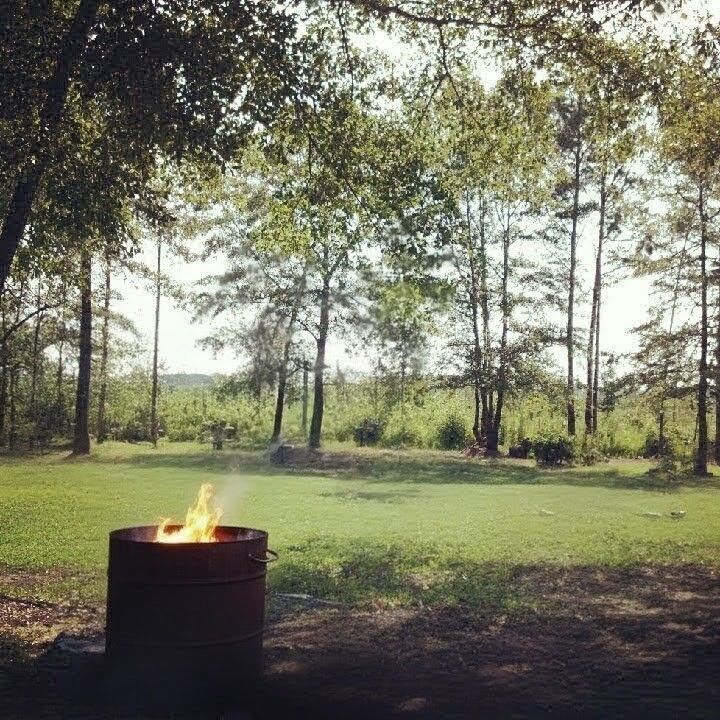
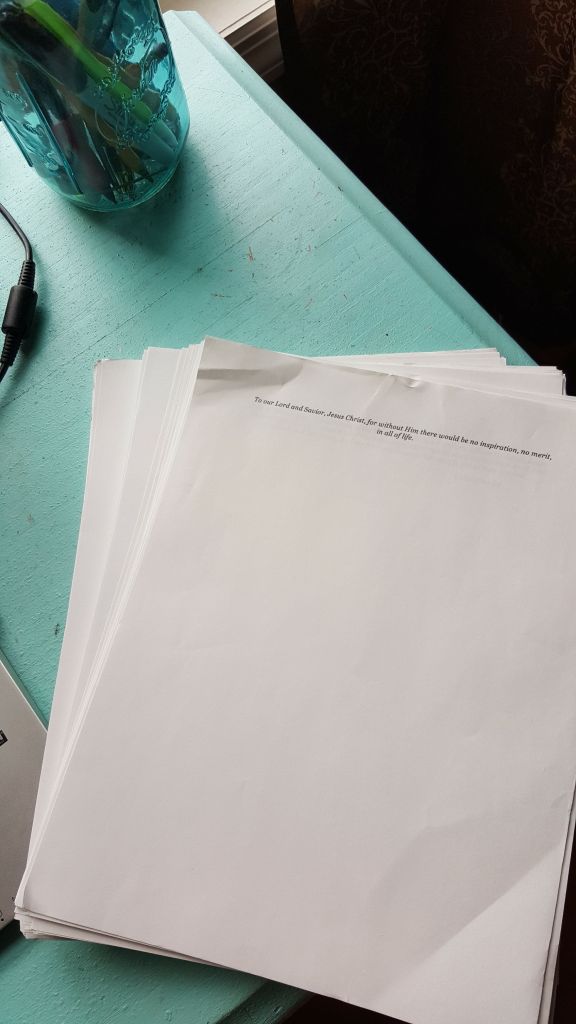
I stood next to my husband in the backyard by the burn barrel, watching notebooks go up in flames. They were bound with ribbons — pages and pages of my own handwriting, years of writing I had done to survive. To cope. To find myself in the middle of a life that often felt like it was happening to someone else.
I felt almost nothing as they burned.
That should have told me everything.
I was convinced I was doing the right thing. A man I trusted — a spiritual leader, someone I had gone to looking for meaning and relief — had told me that my writing was damaging me. And I believed him. I believed him so completely that I stood there and watched the connection to my own true self go up in smoke, and I called it freedom.
It was not freedom. It was one of the most complete acts of disappearing I have ever performed.
That is what a trauma bond does. It does not announce itself. It doesn’t arrive with warning signs you can read clearly. It arrives as relief. As finally being understood. As the intoxicating feeling that someone sees you — and then, slowly, it teaches you to see yourself only through their eyes.
I am writing this for the woman who is confused right now. The one asking herself, in the quiet moments, is this real? Is what I feel real? Or am I just desperate?
I know that question. I lived inside it for a long time. And I want to offer you something I didn’t have then — not a tidy answer, but a map. One drawn from the inside.
The Hunger Before
Before he came along, I was looking for more. That’s the honest version of it. More meaning. More relief. More of something I didn’t quite have words for. I had grown up carrying a wound that most people can’t see — the wound of an adoptee, someone who came into the world already navigating the question of whether her presence was too much for someone to hold.
An ordinary Wednesday felt like being invisible. Exhausted from taking care of everyone. Responsible for everyone’s happiness. Family dropping in without my boundaries mattering. The loneliness wasn’t loud. It was quiet and cold and hard, like a stone I carried in my chest without even knowing it was there.
I went looking for a church, because that’s where people went when they needed answers. And I found someone who seemed to have them. Someone who listened. Who said the right things. Who made me feel, for the first time in a long time, like my words mattered.
What I didn’t understand then is that I wasn’t finding something new. I was finding someone who knew how to stand in the gap of an old wound. And the need that rushed in to meet him — that desperate pull toward closeness, that feeling of finally — wasn’t love. It was hunger finding the wrong food.
This is important for you to hear, if you are where I was: the desire you feel is not evidence that something is wrong with you. Attachment wounds create desire. When someone meets an unmet need — especially one you’ve carried since childhood — your nervous system lights up. Psychologists call this transference. Your body is responding to the shape of what you needed, not necessarily to the person in front of you. You are not bad. You are human, and you are wounded, and someone learned to stand in that gap on purpose.
“The narcissistic relationship is like a riptide that pulls you back in even as you try to swim away. The intensity, attentiveness, and highs and lows are why you swim out to where the riptide is.”
— Dr. Ramani Durvasula
What Intensity Feels Like From the Inside
I want to try to describe what the trauma bond felt like before I had any language for it, because I think this is the part that keeps women stuck — the inability to name the experience while you’re inside it.
It felt like oneness. Like I had finally found the thing I’d been missing. Like I was part of something I would never lose. He offered understanding. Validation. The sense that I mattered, that someone wanted me around, that I had been seen.
But underneath the warmth was something all-consuming. I found it difficult to function when the appetite for these things came over me. I was turning to the relationship for what I needed. I stopped trusting myself to work things out. My inner voice got quieter. His voice got louder.
Here is the thing nobody told me about addiction — and a trauma bond is a kind of addiction: it doesn’t feed you. It feeds itself. I was stoking the fire, not warming myself. The relationship demanded more and more to keep burning. More need. More proximity. More of me poured into keeping it alive.
There was a moment — just a flicker — when something dark moved through me. An instinct. A knowing I couldn’t name yet. I pushed it down because I thought the feeling meant I was bad. The longing I felt, the desperation — I thought those were sins, not symptoms. I thought they were evidence of my own brokenness rather than evidence of what was being done to me.
That is what manipulation at this level does. It takes your own natural responses and uses them against you, until you can no longer trust your own perception of reality.
“Trauma bonding is based on terror, dominance, and unpredictability. As the trauma bond strengthens, it can lead to cyclical patterns of conflicting emotions.”
— Wikipedia, Traumatic Bonding
And when I sensed something was wrong and pushed the knowing down, the relationship taught me to blame myself for the sensing. The predator used my own legitimate needs as leverage. He took what I had shared with him about my life, my family, my longing — and he used it to position himself as the only one who truly understood me.
I burned my books. That is what complete deception looks like. It looks like standing next to your husband at a burn barrel, feeling almost nothing, believing you are being set free.
The Day Something Different Arrived
I didn’t know what genuine connection felt like until it found me. I’m not sure I would have recognized it if it hadn’t been so completely different from what I had known.
It started on a plane to Newfoundland — the island where my biological family is from, the land my grandmother left, the place I had been searching toward without knowing it. I heard people talking around me on the flight and something in me went quiet in the best way. There was a comfort to my soul even in the sound of their voices. Something deep recognized something familiar.
Then we landed. A taxi driver in the early hours of the morning chatted with us like he was genuinely glad we were there. No agenda. Just warmth. I noticed it because I wasn’t used to warmth without a cost.
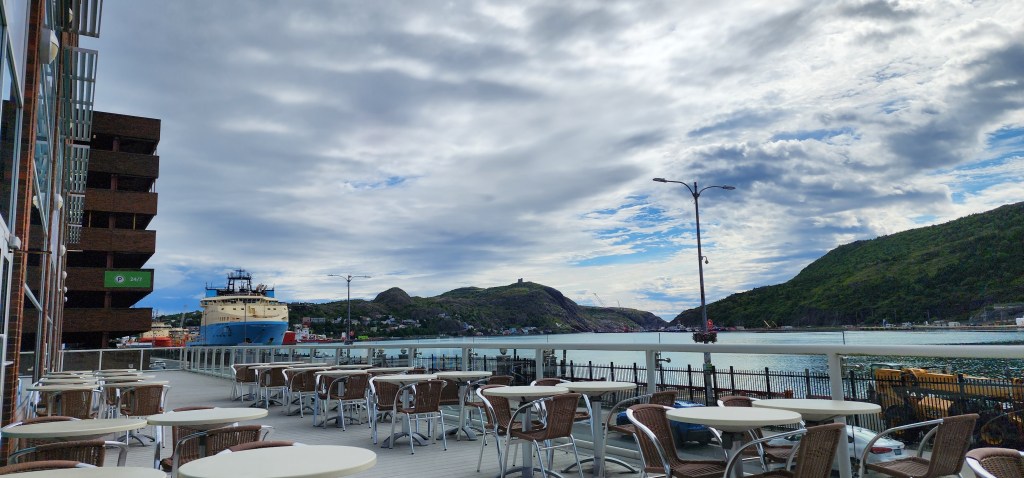
Later I sat on a deck looking out across the water. Boats coming in. People busy on the street below. The beauty was so powerful and so enormous that it didn’t feel real. I struggled to take it all in. And then I walked through the woods — the smell of ocean mixed with pine, blue sky visible through the trees in the distance — and I felt something I had never felt before in quite that way.
I felt welcomed by the land itself.
My nervous system exhaled. That’s the only way I know to describe it. Not excitement. Not the intoxicating pull I’d mistaken for connection before. Something steadier and older than that. Relief. Like a plant that had finally reached water after a long drought.
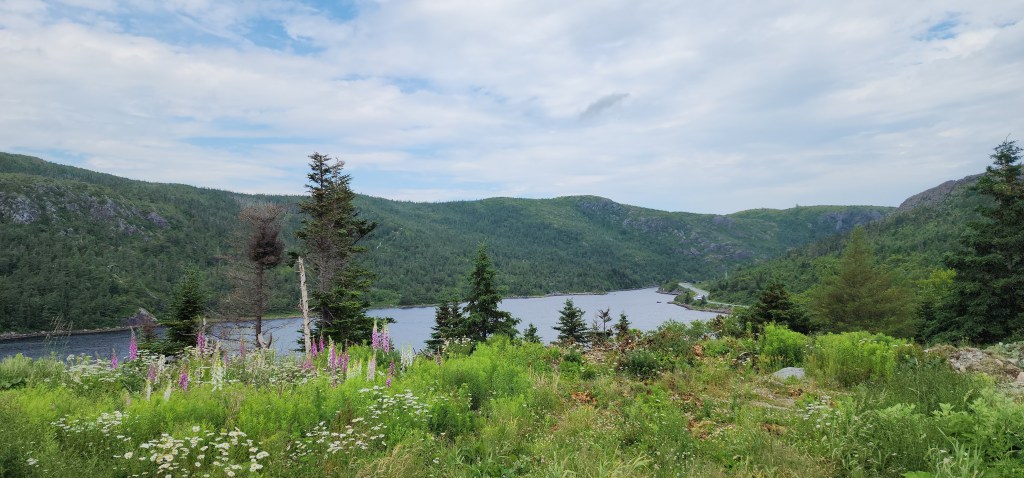
On the last day of the trip I sat on the cliffs above the ocean. Green grass and wildflowers. The enormous Atlantic stretching out below me. I tried to take it home inside my body — to press it into my cells so it wouldn’t leave when I did. I cried when I left. Not the miserable, desperate ache of withdrawal I’d felt before. Grief. Real grief. Because grief is what happens when something genuinely good has to be left behind.
There is a difference between those two feelings in the body. One is withdrawal. The other is mourning. Withdrawal is about the absence of something you depended on to function. Mourning is about the absence of something that loved you well.
“Trauma bonds can be disrupted when healthy bonds are available.”
— Patrick J. Carnes
What Genuine Connection Actually Does
Around the same time I was discovering Newfoundland, I was beginning to experience something similar through a relationship with my cousins — biological family I was only just beginning to know. And those connections taught me something I hadn’t expected to learn.
Early on, I felt energy moving through my body when I felt an understanding I’d never experienced before. Something alive. Like being plugged in for the first time. And yes — there was some fear in it. Fear that I was too much. Fear that these new family members might get tired and pull away. Early on, when they went quiet for a while, I was terrified they might not come back. Just like my mother.
But here is what made it different: they held their own space. They didn’t need me to need them. They only wanted to contribute to my life in positive ways.
That is what a healthy relationship does. It teaches you to stand on your own two feet — and holds your arms up when you need it.
The trauma bond made me less myself over time. I worked to earn approval. I shaped myself into who I thought I was supposed to be. I burned my books because someone I trusted told me my own voice was harming me.
Genuine connection asks nothing of you except to show up. There is no role to perform, no happiness to manage, no place to earn. Two people bring their whole selves and choose each other freely. Not out of need. Out of want.
“Our brains are wired for connection, but trauma rewires them for protection.”
That feels different in the body when you’ve known both.
A trauma bond feels like connection. But underneath it is just protection — a wounded nervous system finding the only way it knew to get what it needed. Genuine connection doesn’t need any of that armor. It can just breathe.
How I Learned To Tell the Difference
I want to give you something concrete, because I know how hard it is to think clearly from inside an experience that has reorganized your perception.
Here is what I now know about the difference between a trauma bond and a genuine connection — not from research, but from living both:
A trauma bond feeds the relationship. Genuine connection feeds you.
A trauma bond requires more and more to keep burning. Genuine connection doesn’t demand to be stoked.
In a trauma bond, the absence of the other person feels like withdrawal — a miserable, unbearable ache. In genuine connection, absence produces grief, not desperation. You can miss someone and still function. You can still find yourself while they are away.
A trauma bond makes you less yourself over time. You lose your voice. You lose your sense of reality. You may even, as I did, burn the very things that connected you to who you are. Genuine connection turns you back toward yourself. It asks you to grow inward, not toward the other person.
In a trauma bond, your nervous system is braced — always waiting for the shift in weather, always managing someone else’s moods. In genuine connection, your nervous system can exhale.
And perhaps the clearest sign of all: a trauma bond requires you to disappear. Genuine connection makes room for you to appear.
“Confusing genuine love and the trauma bond is incredibly easy to do.”
— Laura Kozlowski
I want to say that plainly, because shame has kept so many of us silent about this: it is easy to confuse these two things. Your confusion is not weakness. Your inability to simply walk away is not stupidity. The trauma bond is designed to be difficult to leave. It is built from your own deepest needs, your most legitimate hungers, turned into a mechanism of control.
You are not broken for having been in one. You are human.
To the Woman Who Is Asking Herself the Question
If you are reading this and you are somewhere I have been — confused, exhausted, wondering if what you feel is real or just desperation — I want to speak to you directly. Friend to friend.
Ask yourself this: What would it feel like if you stopped giving so much? Not as a test, not as a threat — just as an honest question. If the relationship requires constant feeding to survive, what does that tell you?
What would it feel like to look for places that give back? That nourish and empower rather than consume?
What would it be like to exist in a relationship where you didn’t have to earn approval? Where you could show up however you are on any given day, and that would be enough?
What would it feel like to be with someone who encourages you to grow toward what you want — toward your own life — rather than toward the relationship?
What would it be like to leave for a while and come back and find that nothing has collapsed in your absence? To know that both people are whole enough on their own that the relationship is a choice, not a lifeline?
These are not rhetorical questions. They are the questions I had to learn to ask. And learning to ask them — slowly, carefully, imperfectly — is how I started finding my way back to myself.
I don’t want to disappear anymore. That sentence is the whole essay, really. I don’t want to disappear anymore — and I don’t think you do either.
The connection you are longing for is real. The need underneath the bond is legitimate. You were made for belonging. You were made to take up space.
The question is not whether you deserve to be loved well. You do. The question is whether you can begin, slowly, to let yourself believe it — and to measure what you’re in against what that actually looks like.
You are not weird. You are not too much. You are not in the way.
And somewhere out there — in a place, a person, a moment — there is something that will make your nervous system exhale. That will feel like being plugged in for the first time. That will turn you back toward yourself instead of asking you to burn what you’ve written.
That is what you’re looking for. Don’t settle for the fire.
———
Lori Williams is a Certified Trauma Care Practitioner and the founder of A Liminal Space, a peer support community for survivors of religious trauma and codependency. She writes from lived experience.
*This piece was shaped through conversation with Claude, an AI writing partner by Anthropic, who asked the questions that helped me find what I already knew.
If something here resonates and you want to learn more, I’d love to hear from you. No commitment. Just a conversation. Reach out to: loriwilliamslimnalspace@gmail.com.
 A Liminal Space