
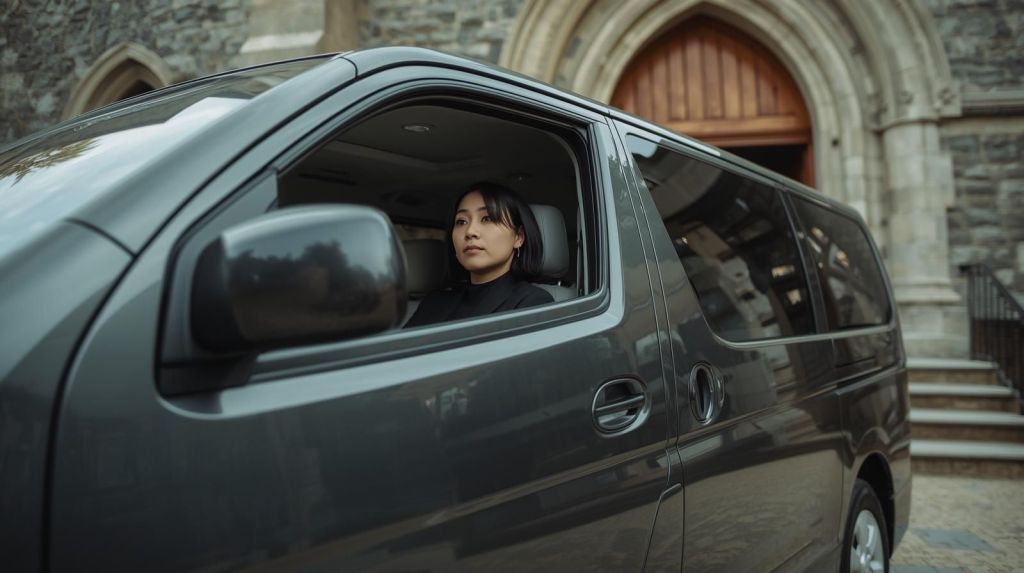
There is a version of my life where I drove away. I think about her sometimes.
She’s sitting in a Toyota minivan, children in the back seat, parked on the front lawn of a church she believed God had called her to. Her hands are on the wheel. And for just a moment — before she goes inside — she pauses.
What if she’d shifted into drive?
I’ve been sitting with that question this morning. Not to punish myself — I’ve done enough of that. In fact, if others could see how much I’ve beaten myself up for that moment, they might declare I’ve suffered enough. And I think that’s been the point — to beat myself up so I can pay my dues.
But here’s what I’m learning: beating myself up hasn’t brought me or anyone else relief. It just keeps me scared, trying to prove myself, and reactive to others. So instead of asking what went wrong, I’m asking something different: what would have gone right?
Here’s what I know about self-punishment: it doesn’t actually fix anything. The purpose of consequences — real ones, meaningful ones — was never just removal. It was always meant to be restoration. My husband spent over two decades teaching prison inmates to become electricians. Many of them did. They got out, found meaningful work, became people who contributed something. One of them wrote on his retirement card: Thank you for giving us a second chance at life.
Second chances. That phrase gets lost in our gotcha culture, where loud, hurting voices are constantly pointing out every wrong. There’s no shortage of pain — which makes it hard not to be constantly reminded of how you screwed up, even when hurting others was never your intention.
The biggest question many of us are carrying is: how do I relieve the pain without causing more harm? What I’m realizing is that it doesn’t happen through self-punishment. It only comes through something much harder — self-compassion.
Here’s something I’ve been sitting with: I have a lot of parts inside me.
If you’ve encountered Internal Family Systems therapy, you’ll recognize this language. But even if you haven’t, you probably know what I mean. There’s the Practical part that says stop dreaming and just get a real job. The Fear part that says stay home, you’ll only get overwhelmed again. The Perfectionist who beats me up for every mistake. The Encourager who says keep going. And the deep Grief that says it’s too late. They all talk at once sometimes, and it can feel like standing in a very crowded, very loud room.
What I’m learning is that I don’t want to squash any of them. They all carry something important. The Practical part has kept me functional. The Fear part has kept me from real danger. Even the shame and grief are pointing to something — a need that was never met. The need for a calm, steady presence that said it’s going to be okay.
This morning I wrote something to all of them, and I want to share it with you:
All of you are so tired. 54 years of this is exhausting. But together you’ve kept me going. Maybe it’s time to sit down, have a coffee together, and stick your toes in the water.
That’s what self-compassion actually looks like in practice. Not eliminating the hard voices. Giving them a seat at the table and a moment to rest.
We need something better than a life of just coping to survive. We need meaningful movement — work that points toward something better. But when you’re beating yourself up, you can’t see the possibilities. You only feel stuck.
I’ve been in this quicksand for a long time. Afraid to move. Afraid I’ll drown. Afraid that if I do anything at all it’ll be the wrong thing. And sometimes when I don’t move I can feel myself sinking further, because not moving is a choice too.
Finding a way forward — without causing further harm — requires something those of us who have been suffering for a long time find very hard to do: be patient and compassionate with ourselves. I’ll confess, I can’t do this alone. I need help. And that can feel threatening too. But it’s the only way I can see out. Finding something solid to hold onto and moving forward one step at a time.
I’ve realized hope doesn’t look like what I thought it would. I thought it was a man standing on a stage behind a pulpit, holding a Bible. But he didn’t have a clue. He was surviving himself. And when you jump into the water with someone who is drowning, you drown too.
This morning I allowed myself to imagine sitting in that van again.
What if I’d driven a few miles down the road to see a psychologist instead? It would have made all the difference. Because that one psychologist in town later became a loyal friend. And that’s what I needed to see — there are choices. Not all of them lead to drowning.
I can see it clearly now: driving away, the pastor watching from the window with confusion on his face, my body feeling relief with every mile of distance. The outcome would have been different. Which means it can be different now. When we know better, we do better. But we’ll never know better until we open our minds to the possibility.
I’ve been thinking lately about the desire many of us survivors carry — the desire to be rescued. I’ve been trying to move forward without getting endlessly stuck in my story. But the reality is that what I survived is my story. It shaped my choices. Being adopted, not being attuned to by my adoptive family — that created a vacuum. Being sexually abused poured salt on already hurting places. Under those circumstances, who wouldn’t want Superman to swoop down?
But what if Superman doesn’t have a cape or a Bible and can’t leap tall buildings in a single bound? What if being rescued looks like ordinary life — getting up every day, putting one foot in front of the other, believing goodness is possible, and setting an intention to notice it?
It probably won’t be in the loud headlines. It might be in a post like this one that reminds you that you aren’t alone. It might be the birds in your backyard singing to tell you it’s a new day. The person who lets you merge in traffic. The barista who looks you in the eye. The coworker who offers to help. The friend who texts to say they’re thinking of you. Your adult children sending you another lazy-mom recipe. The little things that remind you that most of us just want to matter and do some good on this planet.
Maybe that’s what saves us. Our connection to each other. Our connection to the world.
There are a lot of loud and threatening voices out there right now. A lot of seriously hard things happening. Remember — Superman is just a character in a movie. A great hero. But not real.
We are real. And every little thing you do today matters more than you realize.
Take the pressure off. Notice the goodness in you.
That’s what will save us.
A Note Before You Go
I want to tell you something about this post that I almost didn’t share.
Writing this is the work. Not preparation for the work. Not a break from the work. The actual work itself.
When I sat down this morning I wasn’t planning to write a blog post. I was just trying to survive my own thoughts. I let the parts speak. I followed the thread. And somewhere in the middle of all that noise, a quieter voice showed up and said sit down, have a coffee, stick your toes in the water. That voice — your wisest self — is in there too. It doesn’t always get to speak first. But it shows up.
Here’s what I want you to hear: the fact that you are reading this, that something in these words resonated, that you recognized yourself somewhere in these pages — that is not nothing. That is evidence. Evidence that you are paying attention to your own life. That you haven’t given up on yourself, even when parts of you were absolutely convinced you should.
You are further along than you think you are.
I know that can be hard to believe when you’re standing in that crowded room with all the voices talking at once. But look at what you’ve already survived. Look at the moments you showed up even when you were terrified. Look at the connections you’ve made, the insight you’ve gained, the times you chose something better even when something worse was easier.
That’s not quicksand. That’s a path. It doesn’t always look like one — but it is.
Keep writing. Keep noticing. Keep letting the parts speak without letting them drive. And be as gentle with yourself today as you would be with someone you love who is carrying exactly what you’re carrying.
Because you deserve that. Not when you’ve earned it. Right now.
Has there been a moment in your life where choosing differently would have changed everything? What would that version of you have done?
If something in this post resonated with you, I’d love to hear about it in the comments. And if you know someone who needs to read this today, please share it with them.

 A Liminal Space
Leave a comment