
In a world that feels increasingly divided, I’ve been on a journey of discovering what it means to truly listen—both to others and to myself. This reflection emerged from my experiences over the past year, particularly through joining an online recovery community and observing how fear shapes our interactions in both digital and physical spaces.
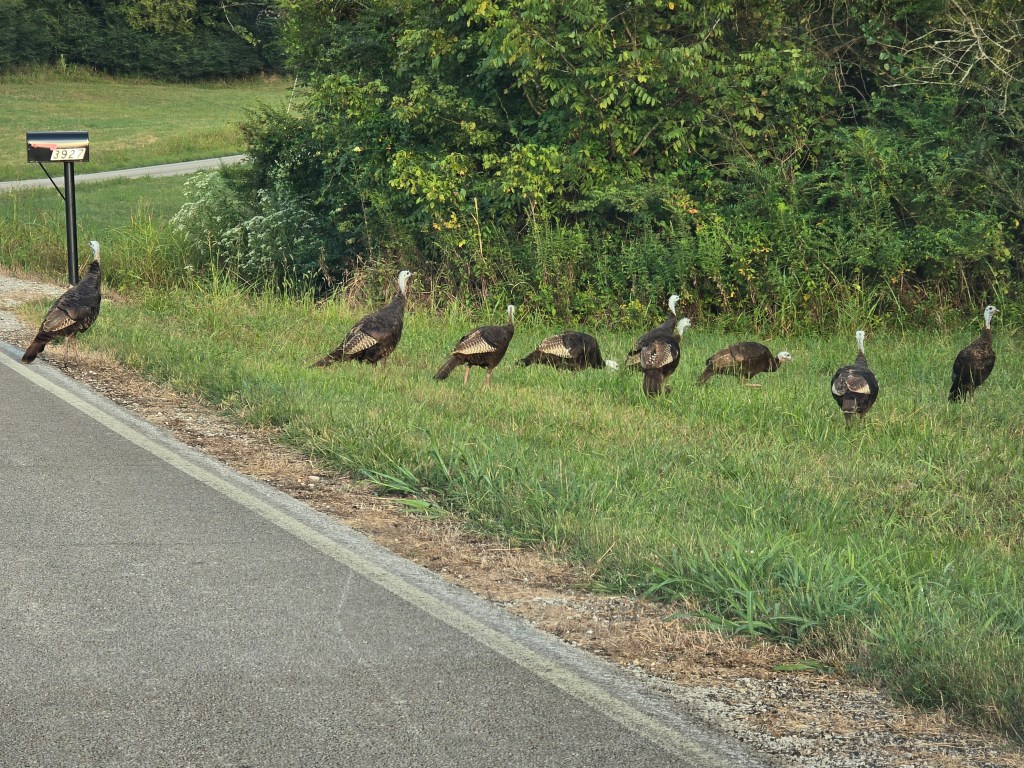
What started as thoughts about a flock of turkeys on a country road became a deeper meditation on influence, belonging, and the choice between survival and thriving. If you’ve ever felt overwhelmed by the noise of social media, struggled to find genuine connection, or wondered how we might bridge the divides that separate us, this reflection might resonate with you. It’s about the power of paying attention to what brings us together rather than what tears us apart.
The Influence Around Us
I’ve been thinking a lot lately about the people who are in my scope of vision—the people who influence my life. When they say we become like those we spend time with, I am realizing it is so true. The power of influence is strong because we are wired to be together for safety.
Yesterday, we watched a flock of turkeys walking up and down the road, jumping, flapping, and following each other up and down the same section of road back and forth, heading nowhere. But clearly one of the turkeys thought that was a good idea, and the others followed suit. Later I observed them huddled together in the middle of the field like they were planning their next move. I’m sure it wasn’t that much of an intellectual decision.
My husband commented that they were not the most intelligent creatures, but that they were amazingly resilient. I suspect one of the main reasons is because they stick together. My husband suggested bird watching as a hobby, and I liked his suggestion. I think we can learn a lot from birds about what we should and shouldn’t do.
Finding Community in Unexpected Places
In the past year I joined an international community of people in recovery on Zoom. It’s been one of the most important and enlightening decisions I have made in a long time. I didn’t realize how much these hour-and-a-half meetings once a week would impact me, but they have—much more than I expected.
I heard American psychiatrist Alok Kanojia (Dr. K) say yesterday in an interview that what we pay attention to impacts us in profound ways. Paying attention to this global community has given me insight into an important truth: we have much more in common than we do differences. The gentle act of simply holding space and listening for a few moments to such a diverse group has revealed this so much, and it’s brought me a tremendous amount of comfort in a world that feels more divided than ever.
Confronting Old Wounds
It’s so interesting that when I first joined the online group, I didn’t think it would make that much of a difference in my life. My way of thinking reveals, looking back, a lot of the rigid thinking that a person can develop after too many bad experiences. Over time, a person can learn to expect little in life. It feels safer that way.
And groups, I realize after gaining some perspective through being a part of this global community, really were something that terrified me more than I was even aware of. I wondered when I initially joined the online community why my stomach was tied in knots. I was just so tense that it made it difficult to focus on what was being said.
Because it is an IFS group (Internal Family Systems), I learned to listen to what my knotted-up stomach was communicating to me, and I realized I was actually bracing for a similar kick to the gut to the one I received over a decade ago when I was part of a religious community. As much as I have tried to move past that event and start fresh, it was still there impacting me.
The Healing Power of Being Heard
Lately, the stomach tension has loosened, and it just happened subtly over time. Looking back, I realize now that it was because I was given the space to share about what I was feeling with a group of people who listened to me without judgment. Finally, I have been able to take a deep breath and loosen up.
This experience taught me something profound about the healing that happens when we feel truly seen and heard. However, this newfound peace was quickly challenged when I returned to other spaces in my life.

The Fear Factory of Social Media
I’ve noticed, however, that when I go on social media, I find myself at times bracing again for impact when I start to read so many different people sharing about their concerns in the world—concerns that are validated by one group and dismissed by another. Fears that are sometimes screamed about in ways that are sounding the alarm to pay attention or else.
It’s become all too common to see these fears on social media because, in case you didn’t notice, fear is what gets our attention and improves ratings these days. And there’s a fear out there packaged and ready for whatever your fear of choice might be. One click on one story leads to more similar stories in your feed.
And I notice that these stories validate my fears and my friends’ fears, and we all begin to talk to each other in our echo chambers where the only sound we can hear is our own voice.

The Trap of Echo Chambers
I find myself quite shocked when I click on my local community page and read that others are in their own echo chambers sharing their own fears of those who have opposite opinions. And that’s when it starts to become all too much. So I make the decision to block the community page so I no longer hear their voices, and I listen to the people who agree with me.
And I feel settled until I read something else that contradicts. And I’m realizing that no matter how many feeds I block, the sad fact remains that many of us have stopped listening to one another.
This realization forced me to confront an uncomfortable truth about how fear shapes our perception and our choices.
When Fear Narrows Our Vision
I’m realizing fear is the biggest problem. Dr. K also said that our vision becomes narrowed when we detect a threat. When we detect a threat, our brains begin to judge in order to assess what to do to protect ourselves. When someone is screaming on Facebook about the people I care about being part of a terrorist regime, then it can feel like a saber-tooth tiger is about to rip my throat out.
Lately, I’ve had to turn down the noise on social media. And that’s hard because there is so much happening in the world, and I don’t want to be taken by surprise if what one side or the other is sounding the alarm about actually does happen.
Maybe that sounds grim, but I think most of us recognize that if we continue to rise up against each other, it’s not going to lead to a good place.
Recognizing Fear in Myself
There was a time when I listened to one side more than the other, but lately I’ve started to recognize reactions to fear on my side that have been against the values I hold dear. And that’s also what happens when fear becomes our default mode: judgment takes over and compassion fades into the background. When there is a war, things like compassion can put our lives at risk.
This recognition became even more visceral during a recent movie experience that served as an unexpected mirror.
A Mirror in Fiction
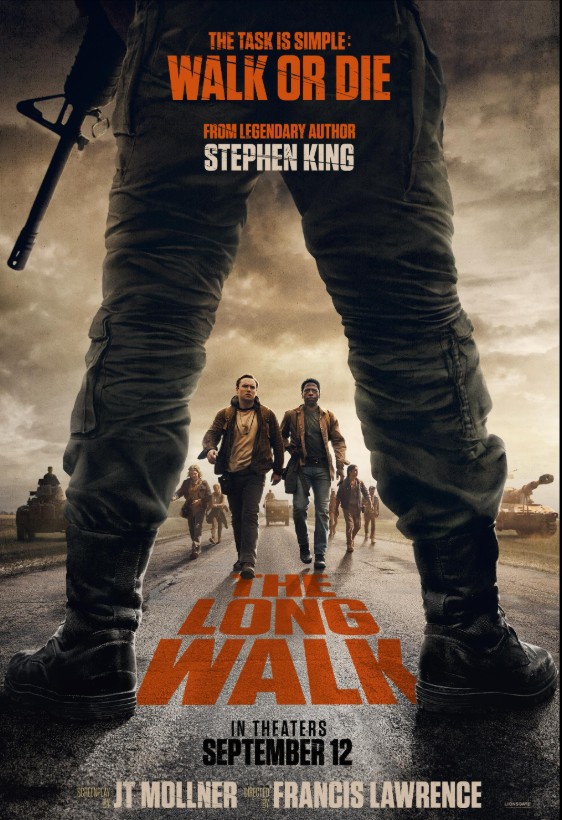
On Saturday evening we watched the newest Stephen King movie, The Long Walk. This dystopian film depicts a horrific competition where young people must walk continuously or be killed by their own government. It was a difficult film to watch, especially under our current conditions in this country. I covered my eyes throughout a large part of the film to avoid seeing people shot by their own leaders.
Spoiler alert: during the final scene when the crowd began to cheer at all the death and sang our national anthem, it was all too much. I felt like I would fall apart in the theater.
After researching the difference between the original Stephen King story and the movie, I wasn’t surprised to discover that some of the story had changed. The ending of the movie was different from the one in the book, and the movie ending left me feeling confused rather than peaceful.
The Speed at Which Values Can Change
After watching the movie, it became all too clear to me how threat can quickly change our values, especially when harm comes to those we love. And even the Bible talks about there being a time for peace and for war. But it doesn’t comfort my heart at all to think about war or ending one life to save other lives, even though it has happened throughout our history as humans.
It’s hard to understand why we don’t learn after having observed so much death. But we haven’t, and that’s hard to comprehend. Why don’t we learn from pain—our own pain and the pain of others? That’s a question I’ve been wrestling with a lot lately.
The Reality of Unchanged Hearts
A friend of mine said recently that they had no choice except to accept that their family members who had brought them harm in all likelihood would not change. A therapist said it was best to prepare themselves for the reality because pain is always an opportunity to learn, but when people ignore pain, it’s an indication they might not change.
I wonder sometimes how much pain it will take to get us to listen to each other. It can feel like it won’t ever happen when I spend too much time watching the news or on social media, which is why I’ve started to spend less time on there. I don’t want to be ignorant, but I also don’t want to be consumed by fear.
Learning from History
I often think these days about generations of people who lived through times of war. There have been times I have judged and assumed that people were terrible because they didn’t do more. But I’m realizing these days that when we are divided, life can easily become about survival of the fittest.
So I’m trying to find ways to do more than just survive because that seems to be the most intelligent decision for such a time as this. Because I have learned as a trauma survivor that when we learn how to do more than just survive, we can thrive and grow and bring more goodness into the world. And that feels like what we need more of these days.
The Power of Daily Choices
Dr. K also said that sometimes we just need to make a different choice in our day-to-day lives to spark change. What changes would you like to see in the world? What choices can you make today to bring about the change you want to see?
Change takes time—sometimes it feels like time we don’t have, especially in a time when everyone is sounding alarms that demand urgency. But one choice can make a huge difference, I believe, in more ways than we think. And that’s another important thing: taking the time to actually think and not get overwhelmed or sucked in by the tsunami of information.

The Simple Act of Listening
It occurs to me as I write this how the simple choice to listen to others can teach us so much about how we all need the same things. And being conscious of those needs might just help us to see one another and find common ground. I don’t want to be at war. I’d much rather find ways to live in peace that serve all of our needs.
Everything I’ve ever regretted that I ever did was when I was in survival mode. I can’t take back those decisions, but I can learn from the pain and make a difference.
The Courage to Feel
But in order to learn from our pain, we also have to be willing to feel it. I think the hardest thing I ever did was stop numbing myself by ignoring the inevitable. It was the most painful thing I ever did, but had I not made the choice when I did, the damage might have been irreparable.
We can turn things around if we will just pay attention to the things that bring us together instead of what tears us apart.
This reflection is part of an ongoing journey of learning to listen—to myself, to others, and to the wisdom that emerges when we create space for genuine connection despite our differences.
Resources
Online Support Communities:
Trauma Advocacy/ Practitioner Educational Opportunities:

 A Liminal Space
Leave a comment