

I’ve been noticing something lately that really bothers me. When you’re struggling emotionally, it can feel incredibly isolating – especially when everyone around you seems fine or like they’re having the time of their lives while you’re sitting on the sidelines.
Have you ever noticed that in our culture, it’s really not okay to not be okay?

I think it’s because most of us don’t actually know how to face our pain. We’re never given permission to sit with difficult emotions or work through hard things. Instead, we’re taught to push through, distract ourselves, or just “think positive.”
But what if we completely reframed this? What if struggling with emotional pain is actually like going to the gym?

Think about it – the more we’re willing to sit with difficult emotions, the more our capacity grows. The heavier emotional weights we become able to lift. Suppressing feelings doesn’t help any more than avoiding the gym helps you get stronger. When we distract ourselves from difficulties in our relationships or avoid talking about things that hurt us, we’re essentially grabbing ice cream from the freezer instead of doing the workout.
If only we could see mental health care the same way we see physical fitness – because that’s really what it is. The more we face things, the stronger we get at facing future challenges.
I had a conversation with my husband yesterday that made me realize how much our biggest problems come from the distractions we choose – putting off uncomfortable feelings, avoiding looking at our past because we don’t think we’re strong enough to handle it. But we’ve only been avoiding things because no one taught us we could handle them.
These patterns started young for me. When I had a bad day at school, I was told “tomorrow will be better, just don’t act like it bothers you so much when others pick on you.” I learned to stay quiet because I knew I’d be “fixed” rather than actually heard or understood.
Here’s what I’ve learned: empathy isn’t weakness either. Sitting with someone who’s in pain and just listening is also strength building. When we feel an urgent need to fix someone, it’s usually because we don’t have the capacity to help them carry their own struggles.
It’s time to completely reframe how we look at mental health. Taking care of your mental health isn’t weakness any more than going to the gym is weakness. Actually, it might be the most important thing we can do these days.
The strongest people I know are the ones who have struggled with their mental health and walked out with greater capacity to sit with others without making them feel weak for struggling. That’s where real healing begins – with recognizing your own agency.
How to Talk About Your Mental Health Work Like the Strength Training It Is
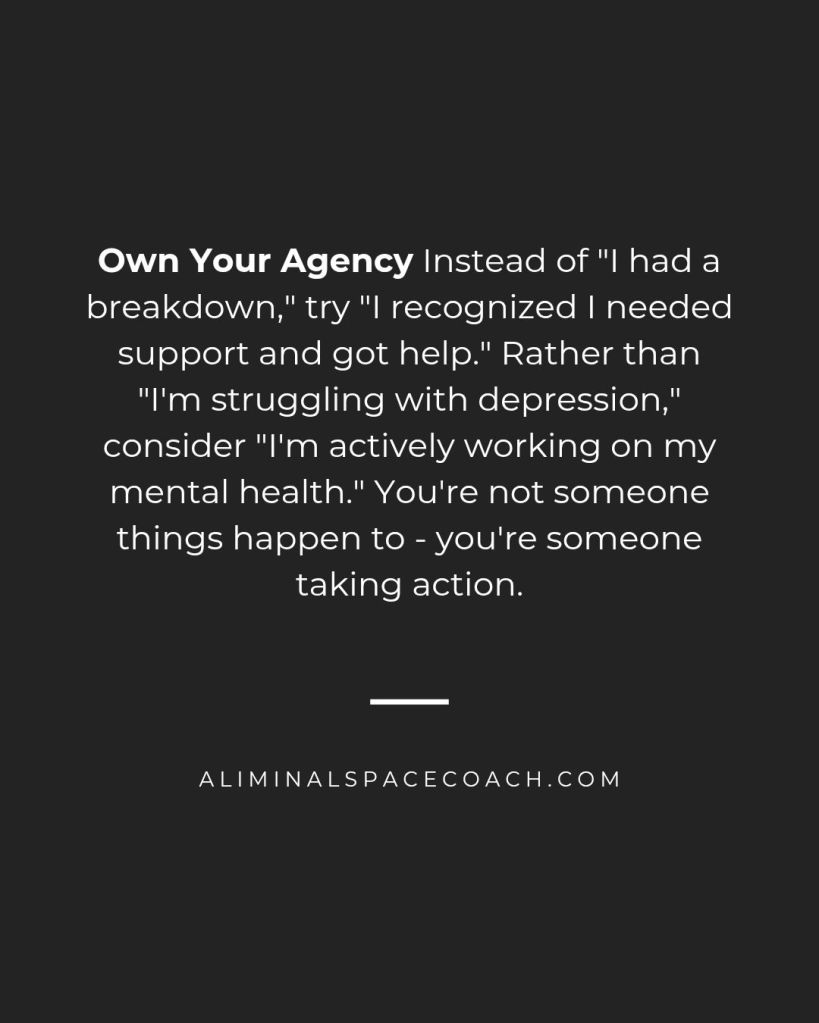
Own Your Agency Instead of “I had a breakdown,” try “I recognized I needed support and got help.” Rather than “I’m struggling with depression,” consider “I’m actively working on my mental health.” You’re not someone things happen to – you’re someone taking action.
Use Strength-Based Language “I’m working with a therapist” sounds like what it is – healthcare. “I invested in therapy” shows you value the work. “I’m building better coping skills” emphasizes what you’re gaining, not what’s wrong with you.
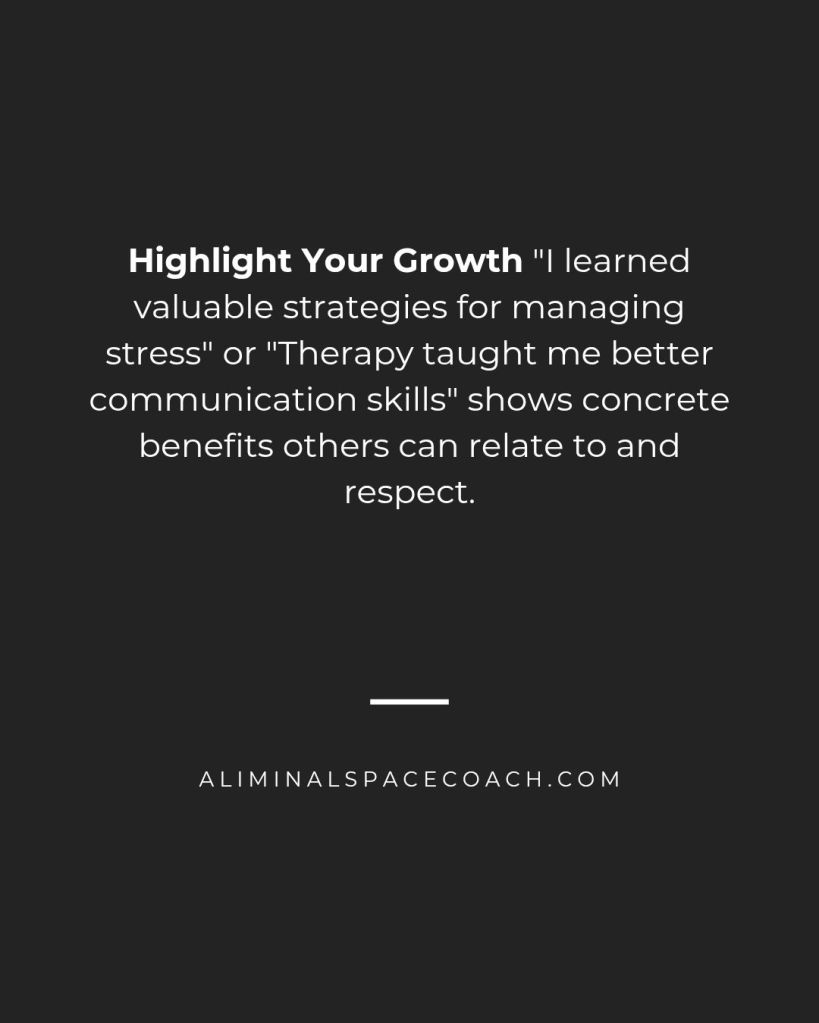
Highlight Your Growth “I learned valuable strategies for managing stress” or “Therapy taught me better communication skills” shows concrete benefits others can relate to and respect.
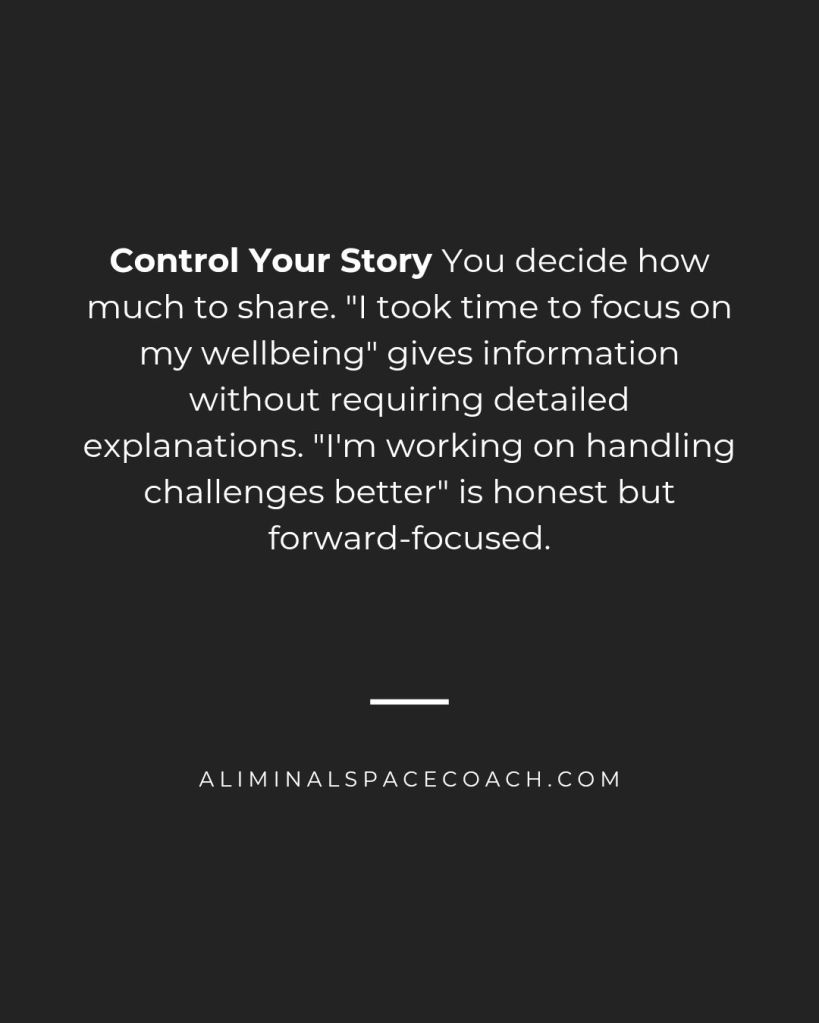
Control Your Story You decide how much to share. “I took time to focus on my wellbeing” gives information without requiring detailed explanations. “I’m working on handling challenges better” is honest but forward-focused.
Show Present Strength “That experience taught me about resilience” or “I’m much better equipped to handle difficulties now” demonstrates how your experience built capability rather than just defining you by past struggles.
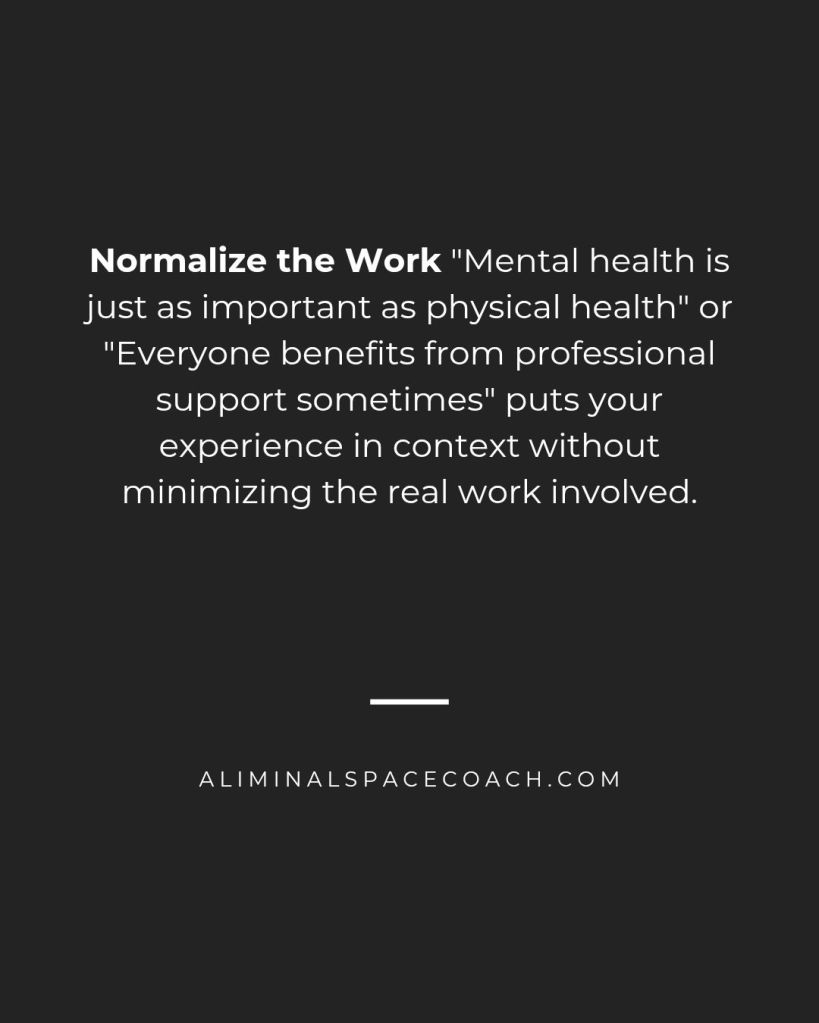
Normalize the Work “Mental health is just as important as physical health” or “Everyone benefits from professional support sometimes” puts your experience in context without minimizing the real work involved.
Focus on What You Can Do “I’ve developed better strategies for managing workplace stress” rather than “I have anxiety.” Keep conversations focused on your capabilities and solutions.
Own Your Hard-Earned Wisdom “Having been through this, I’ve learned…” positions your experience as valuable knowledge rather than just personal struggle. You become someone with useful insights, not someone who “had problems.”
The goal isn’t to hide your mental health journey – it’s to present it as the growth and self-care work it actually is, rather than evidence that something’s wrong with you. Because there’s nothing wrong with getting stronger.
What would change in your life if you started seeing your emotional challenges as strength training rather than something to hide or fix quickly?




 A Liminal Space
Leave a comment